Friday, March 28, 2008

Photos from South Africa

I took the next few pictures after a 2-hour hike to the top of Table Mountain, which overlooks Cape Town:


The "tablecloth" rolls over Table Mountain:


Lounging around with the penguins in Simon's Town, in the south of Cape Town:


The next few photos are from a township (the equivalent of a shantytown) in Cape Town. I wish I could enlarge this first one; the woman is splitting a goat head with an axe, preparing a popular food in the area:


Getting ready to sip some homemade beer in the township:


I'm not sure what the hand signals mean, but I'm pretty sure they're not offensive:


A few friends I made in Cape Town; the three on the left traveled with me for the first few days of my road trip:


Planning my travel route at the hostel in Cape Town:


The view from Hogsback, a village of 1500 people in the hills of south-central South Africa:


A few shots taken while hiking around Hogsback:


Arriving on the Wild Coast--this is the beach in Chintsa:


A friend I made in Chintsa volunteered at a local game reserve, helping to raise lion cubs. She invited me to play with the cubs one afternoon, making for one of the highlights of my trip:


These little ecosystems exist in holes eroded into boulders lying on the beach in Chintsa--they were the home of crabs, snails, and even fish:


In Coffee Bay, a quiet beach town along the Wild Coast, I took a hike with a group to a place called "A Hole in the Wall." These are some photos from the hike:


The locals splashing around near A Hole in the Wall:


There's a reason it's called the Wild Coast--there are more cows sunbathing than people:


And here it is...the 1.4 liter asphalt igniter that successfully got me across South Africa:


More photos from Tanzania, Zambia, and Thailand will be coming soon...

Bangkok and...photos!

Hello from Khao San Road in Bangkok, the backpackers' mecca represented in "The Beach" (that movie with Leonardo). Shops, hostels, and street vendors line the street, which, even on the average weekday is packed with both travelers and locals. Bangkok is a very captivating place that finds an interesting balance between a booming tourist industry (I recently read that 11.5 million tourists visited Thailand last year), and a rich culture. This is a place where you can be surrounded by tourists from all over the world on one street, and on the next be lost among closely-packed traditional homes lining a small, slowly-flowing river, with not a foreigner in sight. You can choose to eat in Burger King and sip Starbucks coffee, or to indulge in traditional phad thai and Thai coffee (or, if you’re not hungry enough for a full meal, you can always munch on roasted grasshoppers, worms, and cockroaches that street vendors sell). Bangkok is overflowing with life and activity--there is constantly something going on, a new place or event to be discovered. And, with many bars and restaurants open 24 hours, this city truly never sleeps.

Being one of the most popular tourist destinations in the world, I was expecting Bangkok to be heavily westernized, having lost much of its traditional nature to the demands and influences of an overwhelming tourist industry. While the negative consequences of the tourist industry here are glaringly clear and oftentimes hard to escape, the Bangkok I’ve found has been, for me, an incredibly positive and beautiful surprise. From the outstanding food that costs $2 a meal (to Al and the Callahans, every time I eat phad thai or tom kha gai soup I think about you guys—it’s indescribably good), to the intense muay thai boxing tournaments, the passion and intensity of Thai culture is apparent. My first evening here I took a “water taxi” along the river that flows through Bangkok, and as the boat splashed along I was in awe of the things we passed: the Buddhist temples on the river’s banks that literally sparkled, the multitudes of markets selling unknown delicacies and trinkets that would take days to navigate and become familiar with, and the brightly illuminated streets pulsing with life and activity. I felt almost lightheaded as I imagined all the things to be discovered and experienced in Bangkok, and how much time I could spend here exploring the city. Bangkok is raw, rough, and intense, but also beautiful and immensely captivating. It’s almost like a drug that can easily engulf you if you’re not careful.

Even after only a couple days, I have lots to say about Thailand. But instead of writing more, I'm going to take advantage of the fast connection I have to post a few pictures from Namibia. I plan to post more pictures from Tanzania, Zambia, South Africa, and Thailand soon, but I have a muay thai boxing tournament I need to head to, so the other pictures will have to wait.

And now, a few unedited photos from Namibia:

They call this place “Giant’s Playground,” and for good reason. Not only are the rocks stacked like toy blocks, but the trees are like miniature trees.


Fish Canyon, the second largest canyon in the world. I bet you know which is first…


These next few pictures are from Kolmannskuppe, an old diamond mining town that was abandoned about 60 years ago.


They actually let me bowl here


Namibia’s coast


Testing the camera…


Our group taking a break on the coast


Sunset on the dunes at Sossusvlei, the tallest dunes in the world


A storm approaching Sossusvlei


Dinner!


Lounging around at our campsite


Sitting on the dunes


The next few photos were taken at about 6am, as the sun rose above the dunes at Sossusvlei.


Jan distracts us from the sunrise


A group of Swedes (who backpack around Africa in a huge, bright pink tour bus) watching the sunrise


Taking a break with the group after a long hike up the dunes


Unfortunately, I ran out of water on the way


Now that’s parched earth


Looking out over Deadvlei (Dead Valley)


The next few shots are of Deadvlei—a place that’s really photogenic and hard to stop shooting


Saturday, March 22, 2008

illuminating the taillights

I'm writing from Durban, South Africa, on the tail-end of my road trip that began in Cape Town almost two weeks ago. Renting a car and traveling at my own pace, with the windows down and my music on the radio, was a very refreshing break from public transportation. With South Africa's (usually) well-maintained roads and civilized drivers, this was a good country to drive. And since I was driving one of the most popular routes in the most visited country in Africa, there was always someone nearby to chat and share experiences with.


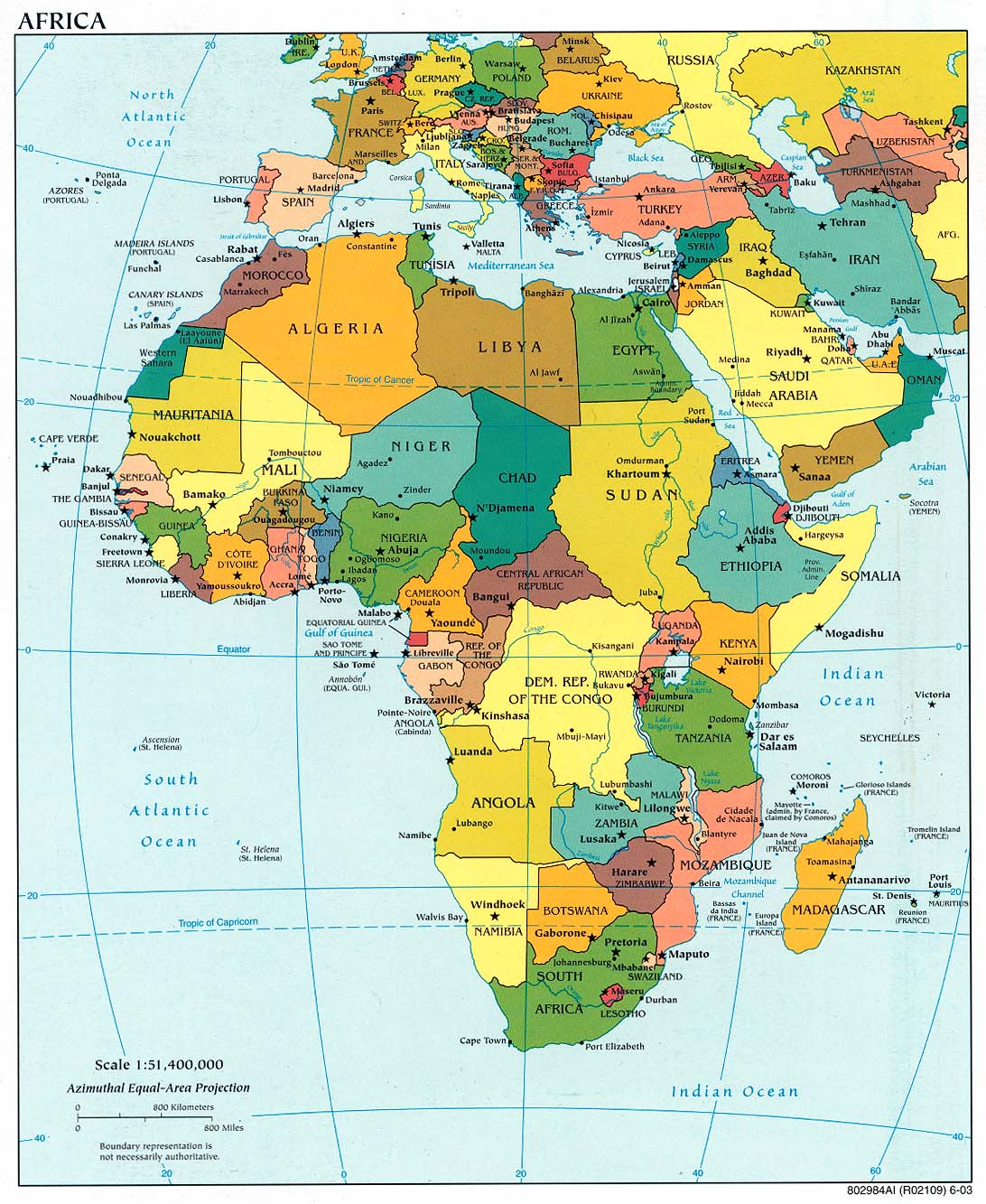
To briefly outline my trip, I left Cape Town on the 12th, about twelve days ago. You can use the map above to get a general idea of where I was, although the smaller towns aren't on the map. In general, I followed the red line that goes from Cape Town east along the coast, all the way to Durban.

On the first day I drove about nine hours, ending up just outside Knysna, a beautiful beach town on the coast. That night I went to a reggae concert in a nearby township (the South African term for a 'slum' or 'shantytown').

The next day, I drove from Knysna to nearby Plattenberg Bay, a smaller town with an equally impressive beach. That night I went to bed with a headache, which I thought would disappear after sleeping. In the morning, I still had the headache, and it was worse than before. It didn't keep me from driving from Plattenberg to Jeffrey's Bay, the mecca for South Africa's surfers (and many shoppers, too). On the way to Jeffrey's Bay (which I thought was a really nice little town, with a laid-back surfer vibe and several nice little coffee shops), I passed the world's highest bungee jump. I had previously had my heart set on doing the jump, and I was even considering doing it even with a splitting headache. But my head was getting worse, and I decided to wait on the bungee jump. That night in Jeffrey's Bay, my sickness spread from my head to my stomach, and I spent a good part of the late night with a trashcan in my lap.

The next day, feeling a little better than the night before, I left Jeffrey's Bay and drove to Port Elizabeth, one of South Africa's larger cities. I decided that this city would offer the best hospitals in the region, so I decided to go into one to find out what was wrong with me. After running the requisite malaria tests, they reassured me that while I did not have malaria, I did have a virus that was spreading throughout the region. They recommended that I take aspirin. Since it was the early evening when I left the hospital (and since Port Elizabeth is a pretty average place), I decided that I could still make some good progress along my road trip. I left the hospital and, after a couple hours, arrived at the small, inland college town of Grahamstown.

In Grahamstown I stayed at one of the most interesting hostels I've been to: The Olde Gaol. The Olde Gaol, decades ago, was actually the town's jail. Today, it is a bar and hostel--after walking in through the large iron front door, I found my room in what was formerly a jail cell. To make the experience a bit more eerie, the place was almost empty, so I had a large dorm including eight beds all to myself. Although Grahamstown is located a short distance from the coast, it has a completely different, almost enchanted feel to it. And for such a region, there wasn't a better place to stay than an old jail.

In the morning, I checked out of the jail and wandered to the nearby university, where I had an amazing spinach and feta omelette. Being near the university made me feel studious, so I read some of the two books I'm reading: "The State of Africa," by Martin Meredith (really great book, if you're interested in understanding the recent history of Africa), and Dostoyevsky's "The Idiot" (also a great book).

After leaving Grahamstown, I wandered farther from the coast into what might be called South Africa's hill country. The landscape gets greener, waterfalls begin appearing, that eerie "enchanted" feeling becomes stronger, and the roads get worse and worse. In the late afternoon I arrived at Hogsback, a tiny mountain village of 1500 people. After checking into a hostel called "Away with the Fairies," I started to realize just how bizarre this village is. It has an area called "Hobbiton," and it's liquor store is called "The Ring." People in Hogsback claim it was the influence for Tolkien's "Lord of the Rings," and I think I believe them. Wandering around the many hiking trails running near the village, I almost expected to see a fairy. Instead, I was followed by families of monkeys and the smallest hummingbird I've ever seen. Eventually, I stumbled upon a large, beautiful waterfall, where I sat to write in my journal and watch the river crabs walking nearby. I think Hogsback is as close to enchanted as the real world gets.

Unfortunately, Hogsback also left me with a flat tire, so, first thing the next day, I drove to the largest nearby city, East London, and spent my afternoon at a shopping mall (that had an electricity outage) near the mechanic. A new tire and a few hours later, I was on the road again, heading to what is known as the Wild Coast.

South Africa's coastline is divided into several different regions, the most popular being the Garden Route. The Garden Route, which begins near Cape Town, is heavily touristy, with well-developed towns, shops, and roads. Along the Garden Route, it's oftentimes hard to meet locals, since foreigners work at the hostels and, oftentimes, even at restaurants. The Wild Coast, in contrast, is definitely wild--the towns are oftentimes very isolated and out of the way. There were a couple times I went hungry since there were no restaurants nearby. But, on the upside, the Wild Coast is closer to what is called "real Africa." In fact, the reason why the towns along the Wild Coast are less developed is because the region belongs to one of the various tribes that populates South Africa.

After changing my tire, I drove to my first destination in the Wild Coast, Chintsa. The tiny town of Chintsa looks onto a gorgeous bay. Rather than lying in the sand, I preferred to sit on some large rocks that projected into the ocean and allowed me to be surrounded by crashing waves. The waves have eroded large holes in the surface of the rocks that are submerged during high tide, and that leave isolated natural aquariums at low tide. It was fascinating to sit by these holes and watch the tiny, independent ecosystems that lived inside, filled with coral, crabs, and snails.

In Chintsa I met another American (Bostonian) named Anita, who had just finished volunteering for several weeks at a local game reserve. She invited me to visit the lion cubs she helped to raise, which made for one of the most amazing experiences I've had in South Africa. The three female cubs, being three months old, were already too big to be picked up, but letting them lick my hand, gnaw on my watch, and playfully scratch me with their huge claws was something indescribable, and unforgettable.

I ended up tearing myself away from Chintsa and driving to Coffee Bay, another tiny coastal village. In Coffee Bay I felt closer to the local community than I had at any other point along the road trip--I hiked around the area, meeting several people and lots of their livestock.

After Coffee Bay, I drove to my final Wild Coast destination, Port St. Johns. Even though the weather had deteriorated to the point that it was impossible to enjoy the beach, I think Port St. Johns would have been my favorite destination along the route--the nearby town is active and full of life, the hostel I stayed at was laid-back, colorful, and had tons of character, and the beaches were beautiful.

Yesterday I left Port St. Johns and arrived here in Durban, South Africa's third largest city. Durban is also, I believe, South Africa's most diverse city, being home to members of various tribes, and the largest Indian community outside India. I've really enjoyed Durban--I'm staying at a beautiful, comfortable hostel (the Hippo Hide), and I've been able to explore the city a bit. Today I walked up and down Durban's coastline, watching everything from a skateboarding competition, to dancing minibus drivers jamming to their booming stereo, to an X-Games style motorcycle jumping competition.

Tomorrow I'll leave Durban, drive through the Drakensburg Mountains, and eventually arrive in Johannesburg, South Africa's biggest, baddest city. I've been repeatedly warned about how dangerous Johannesburg is, but I'm looking forward to experiencing firsthand the city that encapsulates so much of what is South Africa. On Monday morning I'll have to say farewell to my VW CitiGolf. On Tuesday morning I'll take a taxi to the airport, where I'll check in for my flight to Bangkok and begin the next chapter of my journey.

Wednesday, March 12, 2008

south africa

I'm going to add another place to my list of favorite cities: Cape Town. Since arriving here a few days ago, I've had a great time hiking, swimming in the ocean, sitting on a beach next to penguins, eating great food (including crocodile, warthog, kudu, springbok, incredible seafood, and the best lamb I've ever tasted), reading in cafes, and stocking up on supplies and new books at the city's many extremely large and nice malls. Cape Town really has it all. I could definitely live here, and I wish I could stay longer!

Cape Town was made even better when I met up with a South African friend from college, Andrew. Spending time with Andrew, reminiscing about college, and learning about Cape Town and South Africa through his eyes was invaluable. He took me to a beautiful beach, where we swam in the frigid but refreshing Antarctic current, showed me where to find the best lamb the city has to offer, introduced me to South Africa's drink of choice (brandy and Coke), and even cooked me a traditional South African dinner (he even inspired me to learn how to cook!).

Today I'm leaving Cape Town, or, more accurately, tearing myself away from Cape Town. In about an hour I'll be driving a couple hours to the wine country, then making my way to the coast. I'll be making the journey in a white 1.3 liter VW Citi Golf I rented a couple days ago. I'm doing well learning how to drive on the wrong side of the road (rotaries get confusing sometimes), but honestly the hardest part is trying to maneuver a car with no power steering. I'm going to be making the journey to the wine country and coast with three girls I met here in the city (from Germany, Belgium, and Spain), so it'll be great to have some company on the road. The path I'll be following along the coast is a popular one, so meeting people along the way and sharing a ride is a common thing. It's funny that even though I'm technically traveling solo, I don't think I've been alone on this trip yet--there's always someone to share a ride or conversation with, whether for a couple minutes or a week.

I'll be posting more on my trip along the coast as I make stops along the way. I hope you're all doing well!

Friday, March 7, 2008

Africa with a touch of Germany

Yesterday I returned to Namibia's capital, Windhoek (pronounced like "wind hook") after spending one week on a guided tour of the country. Our group, which consisted of six people from the US, Germany, Holland, Italy, and New Zealand, had a great time together.

On our first day, we visited a cheetah sanctuary that rescues orphaned cheetahs (orphaned due to hunting, usually). I was fascinated by watching the cheetahs up close, but I was stunned when a young woman opened the tall wire gate with a bucket of horse meat, walked right into the cheetah's territory, and then invited me to follow her. For the next half-hour or so, I walked with the cheetahs, getting within inches of them as they fed, and at one point even getting to pet one. It was really a spectacular experience, especially after seeing the cheetahs from a distance in their natural environment in the Serengeti.

In addition to walking with cheetahs, the group and I got a wonderful introduction to Namibia, which is really a beautiful, clean, and naturally spectacular country. In Namibia there is a very strong, obvious German influence (which I mentioned in my last post), from street names (I'm staying on Johann-Albrecht Strasse), to food (lots of great German bread and fudge). In addition to that, though, Namibia is the home of various tribes that live the same as they did during the Stone Age. While traveling around the country, I met the San people, the original inhabitants of southern Africa, and other indigenous communities, and in the process I learned a few of the 'clicks' that characterize some of the native languages here. One girl used all four of the clicks as she invited me to a dance that evening in her native language (I was sad to find out there wasn't actually a dance--she just used the invitation to teach me the clicks).

Along our journey, we visited the second largest canyon in the world, Fish Canyon (the Grand Canyon is the first). We also visited what is probably Namibia's most notable natural site: the sand dunes in the Namib desert. These dunes, formed by sands blown in from the nearby Kalahari desert, are the largest in the world, rising close to 1000 feet. Climbing them is every bit as difficult as you probably imagine, but the views from the top and rolling down the side of the dunes makes the climb more than worth it.

Near the dunes, in the southern region of Namibia, we visited an abandoned diamond mining town that used to be the center of Namibia's booming diamond trade. Abandoned in the 1950s, the town had been very well preserved by the sands, which now flood the homes and buildings, providing an eerie ambience to the place.

Another spectacle of Namibia is its skies, both during the day and at night. We saw some spectacular sunrises and sunsets while camping in the middle of the desert, and the night sky, free from the pollution of city lights, is spectacularly bright with stars. At one point I saw two shooting stars within one minute, and it wasn't uncommon to see a satellite slowly making its way across the sky. It's amazing what we miss by living in cities!

Now back in the capital, I'm stocking up on biltong (beef and game jerky, which, by the way is INCREDIBLE here) in preparation for my bus trip this afternoon. In a couple hours I'll be leaving Windhoek for Cape Town, South Africa. The trip will take about 20 hours. I've been told that as I go further south, Africa becomes increasingly European. My experience so far has definitely supported this. So I'm expecting South Africa to be even more European than Namibia. Even so, the mix here in Namibia is very interesting, and, from my perspective, a bit bizarre. Walking around the city, I see children with bright blonde hair sharing the sidewalk with African women in centuries-old traditional dress. And both call themselves Namibians. One thing that has struck me is that the history of Namibia--and Africa in general--is so apparent in the everyday scenes and events that take place on its streets. Walking through Africa is truly walking through history, and experiencing the interactions of peoples and cultures.

Thursday, February 28, 2008

Windhoek on a whim

Since boarding the Tazara Express in Dar es Salaam, it seems like I haven't stopped moving. The forty-hour train ride was wonderful--the mix of scenery, travel companions, and overall comfort made it one of the most enjoyable train rides I've been on. After becoming friends with a Tanzanian man who uses the train on a regular basis, we convinced the conductor to upgrade my ticket from second to first class. The first class section was great--we had four beds to each train compartment, and in the caboose was a bright red lounge with very comfy chairs (unless I was sleeping, this is where I was). The train passed by a couple game parks in Tanzania, which offered views of elephants, giraffes, and warthogs. Because I was sitting in the lounge with my nose buried in "Angels and Demons" (which I finished on the trip), I unfortunately missed the wildlife show out my window. One thing I didn't miss, though, was all the children running alongside the train, shouting, waving and laughing. From Tanzania's coast to central Zambia, the children in each village never tired of running alongside our windows.

To me, traveling by land is usually a great experience; I love seeing how the landscape and people change as I leave one place and approach another. Looking out my train window, I watched tiny villages, beautiful national parks, tall mountains with waterfalls, and the occasional well-populated town pass by.

I arrived in Kapiri Mposhi at about noon, two days after first boarding the train. Once there, I purchased a (very expensive) visa and found a taxi that agreed to make the two-hour trip to take me and a few friends from the train to Lusaka. Once in Lusaka, my friends (siblings James and Emily, originally from the UK) and I made our way to the city's main bus station with the goal of finding a bus to Livingstone, located eight hours southwest of Lusaka. I hope this bus station was Zambia at its worst, because it was a dirty, incredibly hectic place with someone trying to take advantage of us literally every step we took in the station. Fortunately, James, who lives in Malawi, has been to the station once or twice, and knew how to navigate the chaos pretty well. We eventually boarded a bus for Livingstone that, we were promised, would be leaving soon. It left four hours later.

After waiting for the bus to leave for four hours, then being on the road for eight hours, James, Emily, and I arrived in Livingstone, the gateway to Victoria Falls, at about 3am. Fortunately, even early in the morning we were welcomed into Jolly Boys Hostel. In spite of the name, Jolly Boys is one of the best hostels I have ever stayed at, complete with a pool, pool table, a bar, a nice pillow reading area, and a kind of treehouse feel to the whole place. And it costs $8 a night! While visiting the Jolly Boys restroom, I noticed an advertisement for a trip to Namibia, a neighboring country that is extremely difficult to navigate without a tour group or your own 4x4. The tour was so attractive, well-priced, and convenient that the gears in my head immediately started turning.

In the morning I visited reception. They reassured me that, with only one month, traveling from Livingstone to Cape Town via Namibia would be a much better idea than making my way to Cape Town via Mozambique. After a bit more research, I booked my ticket to Namibia's capital, Windhoek. But I'm getting ahead of myself.

Before noon, I put all my necessary items in a ziplock bag and headed to Victoria Falls with James and Emily. These Falls, traditionally called the "Smoke that Thunders," are intense. Because we are currently in the rainy season, the enormous curtain of water (1 mile wide and 108 meters tall) and the mist coming from it were much heavier than normal. The Falls are fed by the Zambezi River, which also serves as the border between Zambia and Zimbabwe. On the Zambian side, the best place to see the Falls is from an island that sits directly in front of the enormous curtain of water. Even standing directly in front, it's extremely difficult to comprehend the size of Victoria Falls--due to the heavy mist, it is extremely hard to see the Falls in their entirety unless viewing it by air.

Having been to Niagara and Iguazu, I can say that Victoria is definitely the least developed park. In a way, that was a good thing--I was able to sit on the banks of the Zambezi with my feet in the water, literally ten feet from where the water plummets off the edge. For much of the park, there are no guard rails, only dirt trails that lead to the river's edge. Victoria is also definitely the wettest waterfall. Standing on the island in front of the Falls, the "mist" comes in like powerful rain in all directions--from above, from in front, and even from below your nose. Standing in the mist of the Falls, in awe of its sheer size and power, was a highlight of my time in Africa thus far.

After returning to the hostel, packing my things, getting a good night's rest, and getting advice from James on my further travel through South Africa (he lived in Johannesburg), I boarded my bus for Windhoek, Namibia. Though the battered, grey bus was far from posh, the wind blowing in the cabin, the occasional elephant sighting, and some very friendly Norwegian passengers made the ride very enjoyable. I also had a chance to read a good amount of my new book, Nabokov's "Pnin."

Arriving in Namibia, I can honestly say this country is one of the biggest surprises I've encountered since leaving the US. Perhaps the surprise was amplified by the fact that I arrived from Zambia, an extremely poor country with a reported HIV/AIDS infection rate of 30%. Immediately upon crossing the border into Namibia, I saw big, clean gas stations and enormous supermarkets that would have been at home in Florida. There were picnic areas along the road. And all of a sudden German started appearing all over the place. As I learned, Namibia was colonized by the Germans, and the country only gained its independence in 1990. As some Germans on the bus told me, some parts of Namibia are more German than Germany, simply because they have retained German traditions better than Germany itself has.

Namibia's capital, Windhoek, presented me with even more surprises. This city of about 250,000 has beautiful German architecture, wide outdoor malls, and Mercedes and BMWs all over the place. In a way, I feel like I'm in a city modeled on a ski village in Colorado. This morning I smiled when a brand new BMW GS motorcycle passed me. After walking around a bit, I found myself in the middle of a beautiful street market, complete with arts and crafts, restaurants, coffee shops, and even several spotless malls. Needing some medicine, I wandered into a pharmacy where a German pharmacist advised me. Earlier in the day, my taxi driver told me, "We are like a little Germany in Africa. We have Lamborghinis!" This beautiful little Germany in Africa is truly bizarre, but I'm very glad I discovered it.

Because I've heard from friends back home and here on the road that Namibia is a gorgeous, fascinating country, I decided to book a spot with a one-week camping tour that goes throughout the southern region. I will be leaving early tomorrow morning, and returning the afternoon of March 6th. Having chosen the tour on a complete whim, I'm really not sure what's in store for me, other than getting to see the tallest sand dunes in the world and a few German towns by the sea.

My plans after my tour have also changed. Rather than making a 'J' route down the coast of Mozambique, further down the coast of South Africa, and finally to Cape Town, I have decided on a 'backwards 'J.'' First, I will take a bus from Windhoek to Cape Town. Once in Cape Town, I'll either take buses or rent a car and make my way eastward along the coast, finally reaching Johannesburg. From Johannesburg I will (time permitting) take a bus to Mozambique's southern beaches, which are supposed to be a highlight of that country. I will then return to Johannesburg and fly to Asia for the next chapter of my journey!

Sorry for being a bit long-winded. I've discovered it's harder to find time for the Internet than I was expecting, so my thoughts keep accumulating in my head until I can share them on here.

In general, I'm enjoying the backpacker lifestyle, skimming the surfaces of various countries, getting a brief snapshot of their cultures and lifestyles. It is definitely a contrast to the kind of traveling I've done before, which was almost always tied to work and, thus, a single specific place. When I was working in a single place, I was slightly jealous of those people I met backpacking across the continent. Now that I'm the one backpacking, I realize I would probably be very unsatisfied with this experience if I hadn't previously immersed myself for an extended amount of time in a single foreign country and culture. Driving by thatched-roof villages, I find myself wondering what it would be like to live in such a home, to share their food, and to become a temporary member of their family. My memories of Mongolia, Chile, and Uruguay temporarily calm my curiosity and keep me from getting off the bus, halting my journey, and spending the next few months in a village in rural Africa.