Wednesday, May 23, 2007

the waters kept rising...

Recent events in Uruguay have made the headlines in publications far beyond the country's borders:

"Flooding has caused thousands of people to evacuate their homes in Uruguay after the worst flooding to hit the country for half a century." (http://www.itv.com/news/world_bdd998df33750455b8e0d07e315f5bfc.html)

"(AP) - MONTEVIDEO, Uruguay-Lawmakers on Thursday declared a "national emergency," speeding relief aid to more than 12,000 people left homeless by floods." (http://news.lp.findlaw.com/ap/o/55/05-10-2007/2f360008c36bd48f.html)

"The United Nations is mobilizing a Disaster Assessment and Coordination (UNDAC) team for deployment to Uruguay early next week in the wake of the worst floods to hit the country in half a century." (http://www.un.org/apps/news/story.asp?NewsID=22525&Cr=uruguay&Cr1=)

A topic that comes up in conversation regularly here in Uruguay is that of global warming. I've already mentioned a couple of instances in this blog--a conversation I had with a university student about the melting of Argentina's Perito Moreno glacier; the abundance of butterflies at Iguazú and the now unpredictable wet and dry seasons. But, since my arrival to Uruguay, the issue of global warming had never been placed so directly before my eyes as it was when I visited Mercedes.

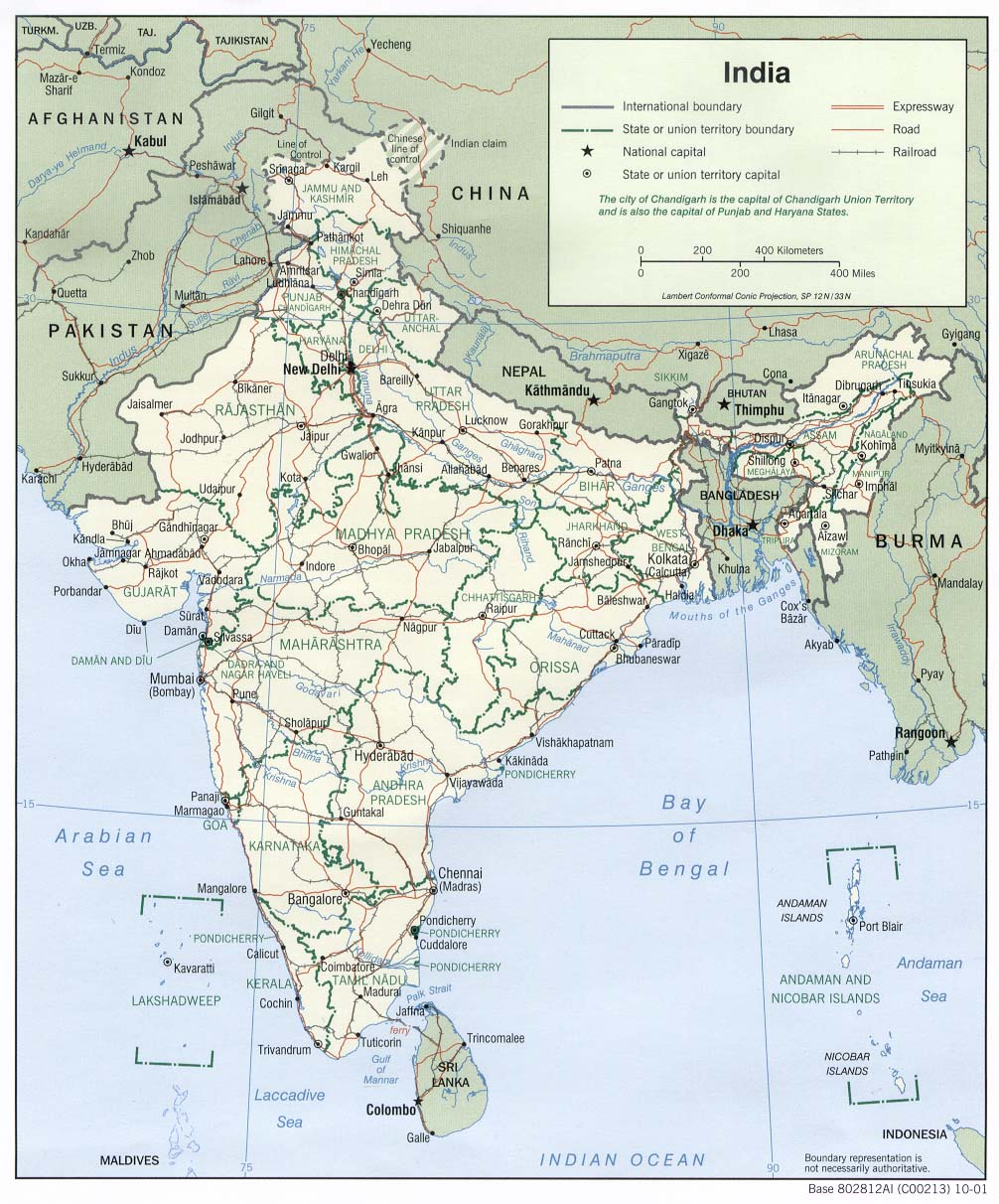
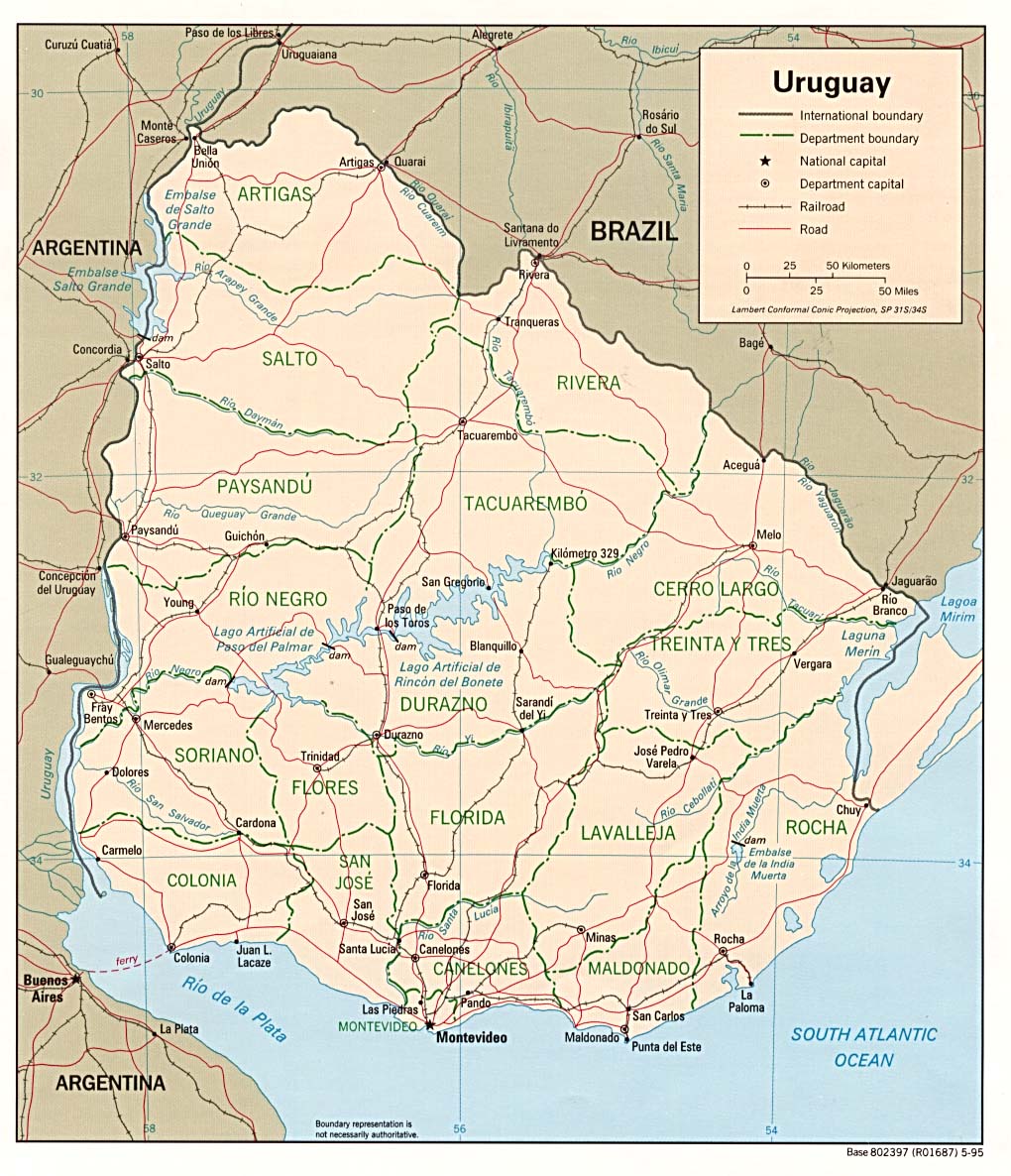
Mercedes is a small city of about 40,000 people, situated in southwest Uruguay on the banks of the Rio Negro. I marked it with a little red circle on this map, and I also highlighted the other districts most affected by flooding with a red square (as well as the nearest dam to Mercedes):


Since arriving in Uruguay, I have made several friends who were born and raised in Mercedes. All of them proudly told me the same thing: "Mercedes has the most beautiful promenade in Uruguay." The normally beautiful area running along the Rio Negro is a source of pride for people from Mercedes, and judging by the pictures I've seen, their pride is justified. Unfortunately, pictures are the only images I have of the promenade, since the area immediately surrounding the river was completely under water when I visited.


The small city experienced the worst flooding it had seen since the 1950s earlier this month, just before I visited. Some distance up the Rio Negro, there is a dam, followed by a large lake located in the center of the country. Heavy rains caused the lake's water levels to rise dramatically. When the floodgates were opened, Mercedes felt the consequences.


When I was in Mercedes, the water had already begun to recede. You can see the former water level where the line along this building is:


These people were in the process of moving their belongings back into their homes after the water had receded:


Just before I left Mercedes, the people there received news that the floodgates would again be opened, and the river's level would rise again. Some of the homes and businesses that were most affected by the flooding are owned by the wealthy citizens of Mercedes, and will gradually be rebuilt. Unfortunately, though, many of the homes belonged to some of the city's poorest. Those individuals will be forced to find ways to support themselves and their families as they find a new home, or rebuild the one they had. For information on some of the relief efforts, please visit the links I included at the start of this post. Uruguayans tend to find great pride in their hometowns, and, as a result, many of the individuals who were forced from their homes by flooding refuse to move anywhere else, and insist on remaining in their home city in spite of any risk posed by natural disasters.

There is a commercial I've seen on Uruguayan television that shows images of recognizable parts of the country submerged in water. The beautiful beaches at Punta del Este are nonexistent, replaced by ocean; the historic, cobblestone streets of Colonia del Sacramento have been devoured by the rising tide; the administrative buildings of Montevideo are visited by individuals in rowboats. The producers of the commercial used computer graphics to achieve the images, but their anti-global warming message is clear. Vast, severe flooding that used to occur once every forty years has already struck Uruguay several times this year. People have noticed the change, and their fear, as well as their surprise, is apparent. Predictable wet seasons and dry seasons no longer exist. Seasonal and climatic cycles have been thrown off, producing erratic weather and the consequences that stem from that. Walking along the streets of Montevideo, one is accompanied by a literal cloud of thirty or more mosquitoes, a phenomenon that the locals swear never occurred this season in previous years.

In spite of the flooding, I thought Mercedes was a beautiful little city. I hope, though, that the promenade will be visible the next time I visit, and that I'll be able to walk along it and experience what many residents of Mercedes are so proud of. But the flooding in Mercedes is just the tip of the iceberg. Last night I was looking at pictures of my trip to Patagonia a couple years ago, and it scared me to realize that the next time I see the Perito Moreno glacier, it may be drastically different. I hope it won't be. But I can't help but wonder what other consequences we and our children will face in the coming years, consequences resulting from a force powerful enough to drown cities, and melt ancient glaciers.

Monday, May 21, 2007

back in the south

Hi friends, family, and visitors. Right now I'm writing from Colonia del Sacramento, a small, colonial town opposite Buenos Aires. I'm here for the day visiting a fellow Fulbright recipient. I'll post soon with more information and some photos of my time here.

Actually, the reason I came down here from Salto this weekend was to apply for a Brazilian visa in Montevideo. In order to travel to Brazil, US citizens need a passport, passport photos, a purchased airline ticket that proves they will be leaving Brazil, financial proof that they can afford the trip and won't be stranded in Brazil, and about $150. Bringing along all those things, I visited the Brazilian consulate in Montevideo last Friday, and within 30 minutes my application was approved. They wanted to give me a visa for only the two weeks of July break, but, with a little begging, I convinced them to give me a visa valid for the maximum amount of time, 180 days.

I have already purchased a flight to Rio de Janeiro on July 2nd, and I plan to also visit Salvador in the northeast before leaving Brazil on July 17th.

Although my visa was approved, I still had to leave my passport at the consulate. Since the office doesn't open again until tomorrow, I have been allowed a few days to enjoy Montevideo, and to make this side-trip to Colonia. It's been a great, laid back weekend, filled with tango music, beautiful sunsets, morcilla, molleja, and chorizo, and street manifestations. I'll post an update with pictures soon.

I have a lot to share with you all. I've decided to start making my posts shorter in an effort to make it easier for me to update and avoid procrastination. Over the next week or so I'm planning to write updates on my visit to Mercedes, a small town here that is severely flooded; on emigration in Uruguay, an interesting topic that I have discussed with some of my students at the university (Liz, Holly, and I will be giving a presentation on immigration in the US later this week, and, in the meantime, we've been leading discussions on emigration in Uruguay); on my trip to Montevideo and Colonia this weekend; and on my decision to change the focus of my research project here. Actually, I'll go ahead and write about that now...

As I read more papers and information related to my original research project--the incorporation of the Tupamaros into Uruguay´s political system--I soon discovered that my exact thesis had already been covered extensively not once, but twice. Mr. Charles Guy Gillespie wrote a wonderfully intelligent 300-page book on the topic that was published by the Cambridge University Press, and just yesterday I discovered (and bought) a book written by an Uruguayan author on exactly the same topic.

At the same time that I was discovering my research topic was more exhausted than 'Fergalicious,' I noticed an interesting phenomenon here related to the isolation and discrimination against gays in Uruguay. In a country that is proudly secular and separated from the Church, I found this especially interesting and troubling. I also found that Mr. Charles Guy Gillespie hadn't written a 300-page book on the topic. More importantly though, I heard from several Uruguayans who strongly encouraged me to pursue the topic, emphasizing that they--and Uruguay in general--had been silent concerning discrimination against gays in the country for too long.

I'm not entirely abandoning my old topic, though. I have some incredible interviews lined up with former Tupamaros that I still plan to take advantage of. Plus, the two topics are not mutually exclusive. The Tupamaros, who, historically, emphasized the protection of individual human rights, are now in power in Uruguay. In spite of their rhetoric, though, many people feel that the party is failing severely on their various promises, including their commitment to individual human rights. I plan to study this theme by specifically looking at the experience and treatment of homosexuals in Uruguay.

If you have any good sources (websites, books, articles, friends who wrote theses) on the topic, please send them my way!

I think that's all for now. I´m going to be updating again soon, with photos, upon my return to Salto. Good night!

Monday, May 7, 2007

While looking through the last post, I realized I forgot to mention the uniforms the kids wear at school. All the children in public school in Uruguay wear the same uniform, which consists of a white robe with a big blue bow on the front. The bow is called a "moña." I've been told that, traditionally, the uniform, including its white and blue colors, signified the importance and presence of democracy in Uruguay. I'm not sure how much that tradition persists, but, to me, the uniform really just means that I spend a lot of time straightening robes and tying big blue bowties. The kids don't seem to mind, though.

"Andan con el termo bajo el brazo"

Since coming back to Salto, time has started to fly by. So much so that I hadn't realized it's already been a couple weeks since I last updated my blog...

Time's been flying by for a few reasons, the first of which is that I'm becoming more and more comfortable in Salto. Liz, Holly, and I moved from the hostel we were staying at since we needed a place with more space. Contrary to what I had hoped, living in a hostel didn't provide many opportunities to meet new people, since the common areas were rarely used. Instead, I was left with a small room with see-thru curtains. Now, I am living a posh lifestyle in the penthouse of a nice hotel located right in the center of downtown. The room is, by local standards, amazing--we have a kitchen, dining room, living room, bathroom, and two bedrooms. My room has a queen-size bed and a window the size of my wall. Since the temperature is usually nice, I leave the windows open at night and, in the morning, wake up to the sound of people bustling in the streets below. Everything is nearby, from a great restaurant/coffee shop across the street to a theater next door.

The other reason time has been passing so quickly is that I'm quickly making friends with the locals. The social scene here revolves around a drink that everyone who has visited knows intimately, called mate (see http://en.wikipedia.org/wiki/Yerba_mate). The Argentines love it, and they say that the only people who drink more mate than they do are the Uruguayans. And it's true. People here walk around with a gourd filled with yerba in one hand, and an enormous thermos under their other arm (or, as the Argentines say, the Uruguayans "andan con el termo bajo el brazo"). Signs posted outside lecture halls read "Inside the auditorium it is prohibited to smoke, or drink mate." During my first week here, I tried to break into the mate drinking culture by purchasing a gourd with John Lennon's face carved onto it, surrounded by the word "Uruguay." Not a popular move with the locals, who tell me I need to get a "real" mate ASAP. In the weeks that followed, I've learned how to cure the gourd, and how to prepare the mate. Lately, I've been drinking it several times a day, not because I like the taste, but because it's just what you do when you spend time with the locals. It's been wonderful growing closer to the people who live here--one friend (an English teacher at a high school here) offered to give me private Spanish classes; another friend invited me to visit her hometown, Mercedes, in southern Uruguay next weekend. It seems like every day I'm invited to this or that park, or to a concert, or to sit on the bank of the river and watch the sunset. Life is tranquilo.

For this update, I finally have some pictures of my students at the public school. I took these during "recreo" one day last week:


Trying to take a photo during a thumb war...


These are a few of my first graders. The girl in the middle had some boiling water spilled on her hand at home, and would quietly sob to herself several times every day. It made me feel terrible, but I think she's doing much better now.


This picture really captures the mood of the school--the kids are all happy and having a good time, while the teachers are constantly trying to get them under control. The teacher on the right had no idea that I was taking a photo and that the kids were responding to me:


I'm really having a great time at both the university and the public school. Just today I gave a lesson to a class of fifth graders on my own, which went extremely well. I've already been invited to teach another lesson tomorrow morning.

I'm wishing you all the best, including a wonderful Mother's Day! More updates coming soon!

Tuesday, April 24, 2007

Iguazu, Iguassu, and Yguazu

While cruising me from site to site between Paraguay and Argentina, Pablo, my driver for the weekend, commented, "You don't waste a single minute of the day, do you?" Then, after considering which rock star first said it, declared, "I guess you have time to rest once you die!" At exactly the moment when the word "die!" left his lips, Pablo, while going 70 mph in his small Renault sedan, hit an unmarked speed bump. We went flying.

Besides being a brief metaphor for the unpredictable nature of my weekend in Iguazú--and my constantly tempting death--Pablo's quotation is an especially appropriate explanation for my little adventure up north. Ten minutes after my last post, I was at the entrance of a random hostal, twenty minutes later, a guy was driving me to Argentina's national park bordering the Falls. The next day I ventured into the beautiful and very hospitable Brazil. The following day I ended up in Paraguay's poor, littered Ciudad del Este, then I was back in Argentina for a lightning-visit to a secluded national park two hours away from my hostal. I was constantly moving, constantly doing something. Each of my days began with the same question, directed each time toward a different person: if this were the only time in my life that I could experience this place, and I had one day to do it, what would you tell me to do? I met lots of new people, heard amazing stories, and had some unforgettable experiences. There's definitely something to be said for traveling alone, especially to a place as unique and diverse as Iguazú.

I arrived back in Salto early this morning, bringing over 300 pictures with me. It's going to be tough for me to boil down the images and experiences for this update, but I guess I'll try to do so by taking you on a tour of each of the three countries I visited: Argentina, Brazil, and, finally, Paraguay.

But first, just so you get an idea of the layout of the falls and their surrounding environment, I'm posting a few pictures I shot during a helicopter ride I took on my second day.

Here you can get an idea of just how dense and lush the surrounding rainforest really is:


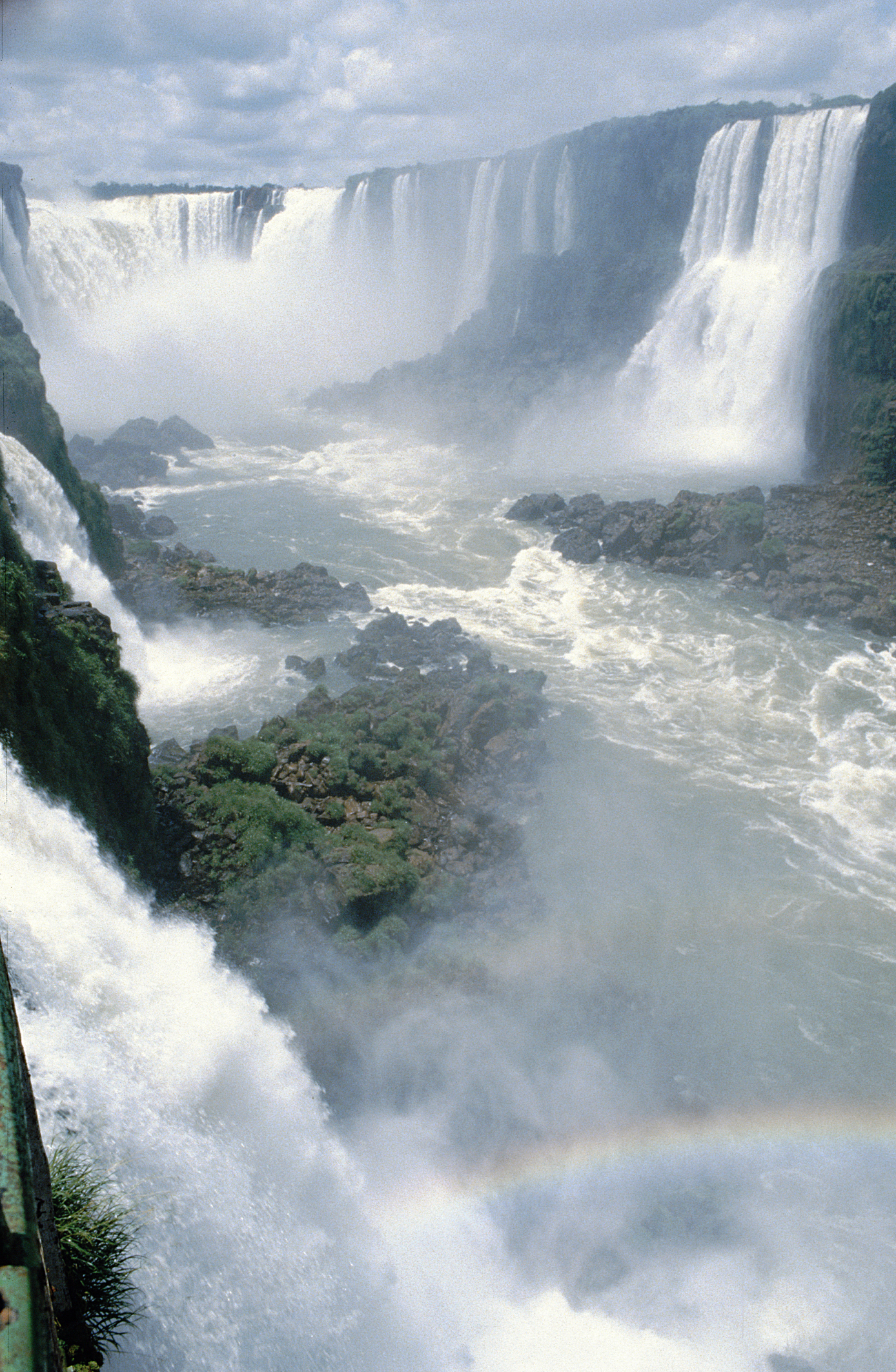
This image captures the Falls in their entirety. At the time of my visit, there were 270 falls, which is about the average number. The border between Argentina and Brazil basically runs right through the middle of the falls lengthwise, with the vast majority of them on the Argentine side. Thus the fact that Brazil offers the more panoramic views. The area furthest to the left, with the rising mist, is the most dramatic area, with the highest and most powerful falls. It is known as the Devil's Throat (La Garganta del Diablo):


Another image of a cluster of falls, all lying on the Argentine side:


So let's start with Argentina...

Argentina, like Brazil, has dedicated an enormous amount of land surrounding the Falls to preservation. This means that now (unlike the years prior to the early 20th century, when the park was founded), the trees in the park cannot be cut down, animals cannot be hunted, fishing is prohibited, and swimming is prohibited. These rules, from what I can tell, are not compromised, in either Argentina's or Brazil's parks. Both countries take enormous pride in Iguazú, and do all they can to preserve and maintain it.

Driving into the park, the scenery instantly transforms into sub-tropical rainforest. Along both sides of the road are tall trees and impenetrable vegetation. Besides this, the first thing I noticed was the enormous number of butterflies flying around, of various colors and shapes and sizes. They were everywhere, and would only increase in number as I approached the Falls.

Arriving at the park entrance, my driver dropped me off and agreed to meet me in the same spot several hours later. I immediately bought an all-inclusive ticket, and boarded a large, open-air Mercedes truck, which romped through the rainforest, finally arriving at a small boat dock on the shore of the Iguazú River. Just as I was boarding the boat--a 30-foot long motorboat with several other passengers--and at the height of my anticipation, some sort of tropical mutant horsefly stung me on my right calf. Welcome to the jungle!!

Our motorboat did a surprisingly good job of maneuvering through the rapids as we cruised upstream, toward the Falls. At this point, I had still not seen the Falls, so it was with great excitement that I took the following photo, which captures my first view of them:


In the boat, we were only able to go a limited way up the river, and not even close to La Garganta del Diablo. Nonetheless, we got very close to some of the "smaller" falls (still huge), and so I exited the boat completely soaked with water and anticipation.

The trails surrounding the Falls on the Argentine side offer some amazing, close up views. My primary concern was taking it all in, and not wanting to forget a single moment. The Falls at Iguazú are especially known for the large amount of mist they generate. As a result, almost every view of the Falls is accompanied by a vivid rainbow. As I wandered along the trails, I was gradually befriended by more and more butterflies, which rested on my arms, my shoulders, and even my head. Everyone I saw was also accompanied by numerous butterflies, and I think we were all equally surprised by the number of them and their willingness to come so close to us.


Eventually, I made my way to La Garganta del Diablo, which lies at the end of a 2km catwalk that wanders over the upper waters of the Iguazú. On the Argentine side, La Garganta is viewed from the top of the Falls, which offers a stunning view, and a deafening roar, as the water falls about 300 feet:


On my way back to the hostel, after finding my driver at the entrance of the park, I began asking him about whether Iguazú was currently in a dry or wet season. His response took me by surprise as he told me that although the Falls used to experience dry and wet seasons in the past, global warming has completely thrown them off. Thus, although April is usually relatively dry, the Falls are actually experiencing a high flow of water right now. One of the effects of this abnormal climatic situation is the high number of butterflies. I was told by a park official that the people working there couldn't remember the last time so many butterflies had been present. I found it alarming to see such an obvious example of the effects of global warming, especially since, just the day before, I had had a conversation with a student at the university where I teach about how global warming is deteriorating Argentina's Perito Moreno glacier in Patagonia. I oftentimes find myself at a loss for words when people here ask me what the United States is doing to alleviate global warming.

A short drive later, I found myself back at my hostel, my shirt, pants, and shoes soaked. In my excitement and eagerness to not waste a second, I hadn't eaten all day. So the first thing I asked about was the restaurant with the best steaks. Everyone pointed me in the same direction: Tio Querido's.

I've had good food in South America, but my dinner at Tio Querido's stands out as a highlight. I have to admit that I made a very big mistake before leaving for Uruguay--I asked my dad for a farewell dinner at Ruth's Chris Steakhouse. Ever since that night, I've been plagued by the desire for a steak as good as the one I had there. And I've had absolutely no success...until I walked into Tio Querido's. I asked for the most tender steak in the place. And boy did I get it...enough of it to feed three people. I had no idea until the huge, sizzling plate was laid before my eyes, but the steak I ordered was 25 ounces of rare "baby beef." To say the side of potatoes I ordered with it was superfluous is an understatement.

Ladies and gentlemen, at first bite I realized I had finally found the steak I had been searching for all these weeks. It was spectacular. It had to have been spectacular (and huge) to justify the $35 pricetag on it. And to justify a description almost as long as the one I dedicated to the Falls. But I digress.

Let's go to Brazil.

Let me start off by saying two things: first, yes, Brazil is absolutely all I thought it would be, and more. I have fallen in love with yet another country. Which indirectly leads me to my second observation: I think Brazil is one of the few countries on the planet where the women could distract someone from something as unbelievable as the Iguazú Falls.

Struggling to keep my attention focused, the panoramic views offered by Brazil's Iguassu (different spelling) National Park were amazing. Since the Falls are primarily on the other side of the river, the Argentine side, it's easier to photographically "take it all in" (although it's still hard to do so mentally):


Perhaps it was just me, but I felt that the ambiance of the Brazilian side of the Falls was different from that of the Argentine side. It seemed to be wilder, with more animals such as this one just strolling around:


Additionally, I felt that the people's attitudes were, as a whole, different. Everyone was smiling or laughing. Kids were yelling at each other to see this or that spectacular view. One shirtless man stretched out his arms, lifted his face, and stood in the mist of one of the waterfalls.

The climax of my experience at the Falls was seeing La Garganta del Diablo from the Brazilian side, which, unlike the Argentine side, is actually from within the Falls, not above them. A walkway extends out and over the Falls, and walking out on it gave me the feeling of being right in the middle of it all--water was falling in front of me, behind me, to my left, to my right, and even right under my feet.


Upon [reluctantly] leaving the park, Pablo took me to have some wonderful Brazilian food, including fish, various meats, and even shawarma. We wandered a bit through Foz do Iguassu, Brazil's nearest city to the Falls. The residents of the city come from all over the world, as is apparent in the high number of Chinese and Middle Eastern restaurants I saw.

I also took a brief excursion up to the Itaipu Dam, a binational project between Paraguay and Brazil that is better known as the largest hydroelectric plant in operation in the world (soon to be surpassed by the Three Gorges Dam in China). "Popular Mechanics" listed the Dam as one of the "Seven Wonders of the Modern World." It produces about 20% of Brazil's power, and 90% of Paraguay's. Although I only briefly visited, the structure was beyond impressive. I gathered some interesting facts during my visit: the dam stretches almost 8 km in length, and is 196 meters tall. The maximum discharge of the spillway is 40 times greater than the average flow of the Iguazú Falls. To give you an idea of the vast amount of power it produces, Brazil would have to burn 434,000 barrels of oil per day using thermoelectric plants to get the same amount of power produced by Itaipu. Its rate of construction set world records, and was equivalent to a twenty-story building every 55 minutes.

In the early afternoon, while driving along a well-maintained road on the outskirts of Foz do Iguassu, Pablo pointed toward a large, beautiful white mansion with a Spanish tile roof. "You see that?" he asked, having just put on the left blinker. "Nice house. There's a favela about 200 meters up this road." I asked if we could drive through, so I could see it. "Are you crazy? I can guarantee you we would be robbed." He agreed, though, to give me a quick glimpse. As we passed in front of another three-story mansion, Pablo pointed across the street. There, in a tiny lot, were piled up about eight feet of garbage bags in a large heap. Just to the side of the bags I could make out a shack, made of wood and a flimsy metal roof. A little girl, her formerly pink clothes filthy, knelt outside and munched on something. "That is one of the things that, unfortunately, characterizes Brazil. You have the extremely wealthy living, side-by-side, with the extremely poor."

Paraguay.

Waking up on day three, I had absolutely no clue what I would do with my day. I was thinking about visiting the Jesuit ruins, but was also tempted to wander into Paraguay, which people had formerly discouraged me from visiting. After talking with an older man who worked at my hostel, I decided to go into Paraguay to visit a little-known waterfall called Salto Monday, and to follow that up with a visit to the city, Paraguay's Ciudad del Este.

I was unsure what to expect in Paraguay, not knowing anything about the country beforehand except for the multiple times Argentines had warned me not to go there due to the poverty and danger. Pablo and I crossed the border and entered Ciudad del Este with no problem (the Brazilian and Paraguayan borders are patrolled only occasionally, and weren't patrolled at all during my visit). Immediately the scenery changed. The bridge crossing the river that marked the border was poorly maintained, and littered with trash. The poverty was apparent--people were dressed in clothes that didn't fit them properly. I was reminded of scenes I had viewed in pictures of Bolivia, or during my visits to central Mexico.

Paraguay has attempted to take advantage of the high flow of tourists in the area by building enormous shopping centers that offer counterfeit and oftentimes stolen electronics. Ciudad del Este greets its visitors with enormous billboards advertising Pioneer, Sony, and Samsung electronics. It's like a poverty-stricken Times Square, with dusty streets. Huge signs throughout the city , and even in Brazil, read "Come buy the Mona Lisa in Paraguay!" The advertisement reveals more than it probably intends to by hinting at the fact that much of what is available at the shopping centers is ripped off and faulty. Officials in Brazil and Argentina are aware of the businesses, and frequently search cars and tour buses in their countries for such contraband. My bus back to Concordia/Salto was searched numerous times, and each time people had to produce papers for the electronics they had purchased.

Pablo had actually never been to the Salto Monday, so we had to stop for directions at least fifteen times. Being a proud Argentine (and Porteño, at that), and driving a car with Argentine plates, Pablo warned me that people will oftentimes run up to the car and grab things out of it. He completely rejected the idea of eating lunch in Ciudad del Este, claiming that the car would be robbed. Eventually, we arrived at the waterfall, which could be found after driving through several small neighborhoods. The Salto Monday waterfall was not advertised at all, and I was surprised that Paraguay hadn't attempted to lure tourists to it. Although small in comparison to Iguazú, it was still pretty. The site was relatively untouched by tourists. The park was even hesitant to accept Argentine pesos for the entrance fee.

I felt a bit uneasy in the park. Although well-maintained, I was clearly the only caucasian. Even Pablo the Argentine stood out--people asked if he was my father. On the platform overlooking the waterfall, I met four Paraguayans who put me at ease at least a little bit--they were all police officers. Normally that fact wouldn't really put me at ease. But these guys were great. They gave me some of their tereré, which is similar to the mate consumed in Argentina and Uruguay, except that it is cold. They were also very eager to learn about the United States, and even about the Falls at Iguazú, which they had never visited. I showed them the pictures on my camera, which they enjoyed. I asked them why Paraguay doesn't advertise its waterfall and take advantage of the money that could attract. They responded that Paraguayans take great pride in their country, but that they don't want thousands of tourists to swarm in. The waterfall is for the Paraguayans, and they want to keep it that way. I quickly learned that Paraguayans place great value on their culture and traditions, not only on their waterfall. The four police officers began teaching me Guaraní, Paraguay's indigenous language, and the language listed as the country's first language. They proudly told me that every Paraguayan can speak Guaraní, and that it was the language that was used to name not only Paraguay, but also Uruguay and Yguazú (Guaraní spelling). "You know," they told me, "Iguazú Falls used to be Paraguay's. We used to be a very rich country." Although their tone was somewhat sad, they said this with a smile.

I couldn't help but get a photo with the guys before leaving the park:


Now, being back in Salto, I find myself telling locals about Iguazú again and again. Many of the people here have been there, yet many have not. Many of the people I've talked with have commented that they know the Falls must be amazing, because of the smile on my face when I talk about it. Although filled with extreme emotions on both sides of the spectrum, I learned about three countries--two of which I had never previously visited--and their people. The Falls were beyond description, but equally so were the people I met and the aspect of their lives I was able to briefly witness.

Friday, April 20, 2007

Iguazu or bust

Faced with another long weekend due to a national holiday that falls on next Monday, I--completely on a whim--decided to visit a place I have dreamed of visiting for years: the Falls at Iguazú. So yesterday I crossed into Argentina by ferry, spent a nice, lazy day in Concordia, then boarded my bus. Twelve hours later, I am writing you from the tropical and very green town of Puerto Iguazú.


Reportedly, Eleanor Roosevelt said "Poor Niagara!" upon first seeing the Falls at Iguazú. Known not only for its waterfalls, but also for the nearby Jesuit ruins and "Triple Frontier" between Argentina, Paraguay, and Brazil, this region is extremely popular for tourism. On the trip here I met backpackers from Denmark, Australia, South Africa, and Ireland. The town of Puerto Iguazu reflects the heavy influence of tourism--hostels that look like bungalows line the streets, images advertising tours of the falls are everywhere, and I seem to run into caucasians wearing backpacks more often than locals.

Traveling north from Salto to Puerto Iguazú, the change in scenery is apparent. The vegetation gets increasingly lush, the flat terrain transforms into rolling hills, and lakes and rivers appear with increasing frequency. I really felt as if I had arrived in Brazil--Amazon jungle and all! The arrow on this map shows exactly where I am:


I found a few sites that have more information on the Falls. The first site (whether or not it's reliable, it's entertaining) was created by a guy who identifies himself as an authority on the "Modern Wonders of the World." He listed Iguazú as #8 on his list of the top 100 wonders (http://www.hillmanwonders.com/iguazu_falls/iguazu_falls.htm)

Wikipedia probably provides the best information and pictures of the Falls. I think it's section "Comparisons to other famous falls" is especially interesting: http://en.wikipedia.org/wiki/Iguazu

Alright, that's enough time for me in the Internet cafe--it's time to go see the Falls! I'll be writing again soon, and posting my pictures once I get back to Salto on Monday. Have a great weekend!

Sunday, April 15, 2007

the border crossing

As soon as I clicked the "Publish" button on my last post, I realized I had forgotten to include one of the more exciting and bizarre events of the week...getting back into Uruguay from Argentina.

One of the issues dominating the headlines of Uruguayan and Argentine newspapers alike is that of the "papeleras." The story, basically, is this: after Argentina rejected the plans for an international paper company to build a factory on the Argentine shore of the Uruguay River (the river that forms the border between Argentina and Uruguay), Uruguay accepted the offer. The company, together with the Uruguayan government, is developing plans to build the factory on the shore of the river, not far from my humble home of Salto. Consequently, there is now a significant amount of hostility between Argentina and Uruguay, motivated by either the factory's pollution of the Uruguay River, or, perhaps, more political factors (exactly why Argentina rejected the company's offer and now criticizes Uruguay's acceptance of it is debated). This political cartoon expresses the commonly accepted Argentine side of the argument:


This whole conflict didn't really affect me, until I decided to come back to Salto from Buenos Aires. In opposition to the building of the factory, groups of Argentines have taken to cutting off the bridges that connect Uruguay and Argentina. When I bought my bus ticket from Salto to Buenos Aires, I was warned that the bridge between Salto and Concordia, Argentina, would be cut during the entire week of Semana Santa, but I decided the trip was worth it, and I would take the risk. If all else failed, supposedly there was a ferry that could get me across.

That wasn't really the case. Fortunately, the bridges hadn't yet been cut when I left Salto for Buenos Aires. The situation had changed, though, by the time I needed to return. At 6am last Sunday, my bus from Buenos Aires stopped in Concordia, and left me at the bus station there. The bridge was still cut, and the bus wouldn't be allowed across. The sun hadn't yet come up, so, in the dark, I started asking around about whether a ferry could take me across the river, or if a taxi driver would drive me. Finally, I found a man who offered to drive me as far as he could.

The ride lasted about 30 minutes, and, finally, we drove up to the entrance of the bridge, across which a group of people sat, flying a large Argentine flag. What I had heard was correct--no one was crossing the bridge. Right there, in front of the protesters, the taxi driver told me that was as far as he could take me, so I paid him and wished him a good day.

Exiting the taxi, and standing face-to-face with the protesters prompted one of the most awkward and bizarre emotions I've felt. Were the protesters going to attack me, or just give me a customary greeting? I wasn't sure whether to walk up to them and ask permission to walk across, or to just ignore them. So I ignored them. I walked past, and, since they didn't say anything, I just kept walking. It was a lonely walk, but I was just happy not to have rocks thrown at me. About 15 minutes later, I arrived at the customs office.

I don't think the handful of officials there were expecting to have any visitors that day, but they didn't have a problem stamping my passport and saying, "welcome to Uruguay!" I smiled, thanked him, and walked away. Then I came back and asked if he could call me a taxi. It would have been a long walk to Salto.

Thirty minutes later, I was in my room, safe and sound. I fell into bed and caught up on sleep, grateful to have successfully arrived in Salto. Once I had rested, I thought back on the experience, and realized how political many of these issues really are. In the newspaper articles that cover the papeleras, the group cutting the bridges is made out to be a big, intimidating bunch of rabble rousers, as these pictures reveal:


In reality, there were a total of ten people blocking the bridge, chatting, sipping mate, and affecting trade, tourism, and general transportation. I am not entirely sure why the Argentine government would allow this to happen, but it does. Such is Latin American politics, I guess.

If you would like to read more about the conflict, please see this article from the BBC:
http://news.bbc.co.uk/hi/spanish/business/newsid_6518000/6518363.stm