I'm currently in Dar es Salaam, Tanzania, waiting to board a train to Kapiri Mposhi, Zambia. The train was supposed to leave yesterday, but 'mechanical difficulties' caused a one day delay. Apparently delays in Africa's train system are pretty normal.
Dar isn't a bad place to be stuck for a day. I have a basic room at the local YWCA with a bed, mosquito net, and sink. It's pretty comfortable, but the midnight curfew was a bit annoying. Last night I saw "Gone Baby Gone" at a mall near the university. Seeing movies while traveling is always an enjoyable experience for me--it's like getting a little taste of home. I've also been reading a lot lately. I'm making my way through Dan Brown's "Angels and Demons," which is entertaining. I'm looking forward to beginning some of the other books I recently bought (a couple books by Nabokov, Turgenev, and Tolstoy). In my room at the YWCA I also found "The Amazing Adventures of Kavalier and clay," which I'm looking forward to starting. I left "Animal Farm" in its place for the next visitor to room 9.
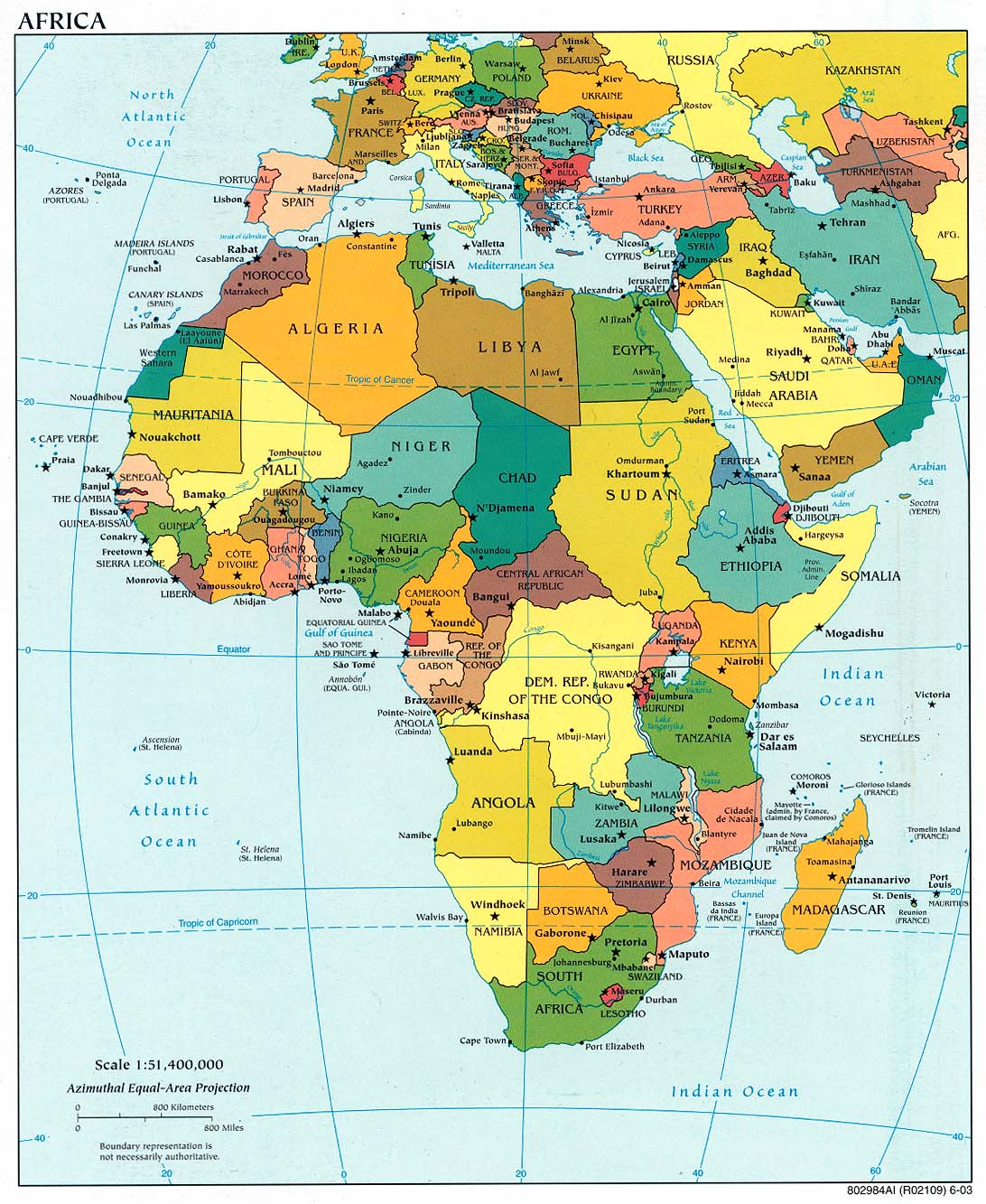
My train should leave at 3pm today (7am EST I think). The trip from here to Kapiri Mposhi, Zambia, will take just over forty hours. In Kapiri Mposhi, I'll find a bus to Lusaka (Zambia's capital), then to Livingstone, the gateway to Victoria Falls. After Victoria Falls, I plan to take public transportation back to Lusaka, then to Malawi's capital, Lilongwe. From there I'll head east to Mozambique (I got a 2-month, multi-entry visa without any problems). I plan to make my way down Mozambique's coast to Swaziland and South Africa. But I should be posting again long before that.
I hope you're all doing well. I got to see a good friend from Florida, Katie, here in Dar. She's studying abroad here, and invited me to explore a bit of the city, and to visit an English class she teaches for local craftsmen. It was a wonderful experience, and I was very impressed by their dedication to their studies.
Dina left for New York City a few days ago, which means I'm now officially on my own. It's a bittersweet transition, but I'm excited about the adventures that lie ahead, and the new friends I'll make. Backpacking usually provides a constant supply of interesting and unique characters.
I hope you're all doing well! I'll be back soon with an update.
Saturday, February 23, 2008


Sunday, February 17, 2008
Tanzania, Zanzibar, and the next chapter
Hello from Zanzibar! I just took a few minutes to include links to some maps that I hope you'll find useful--the links are in the sidebar on the right side of the screen (over there------>>>>>). Thanks to UT-Austin's Perry Castaneda Library Map Collection, definitely the best I've come across. I've left the Fulbright-related links up in case anyone decides to read my older posts from Uruguay.
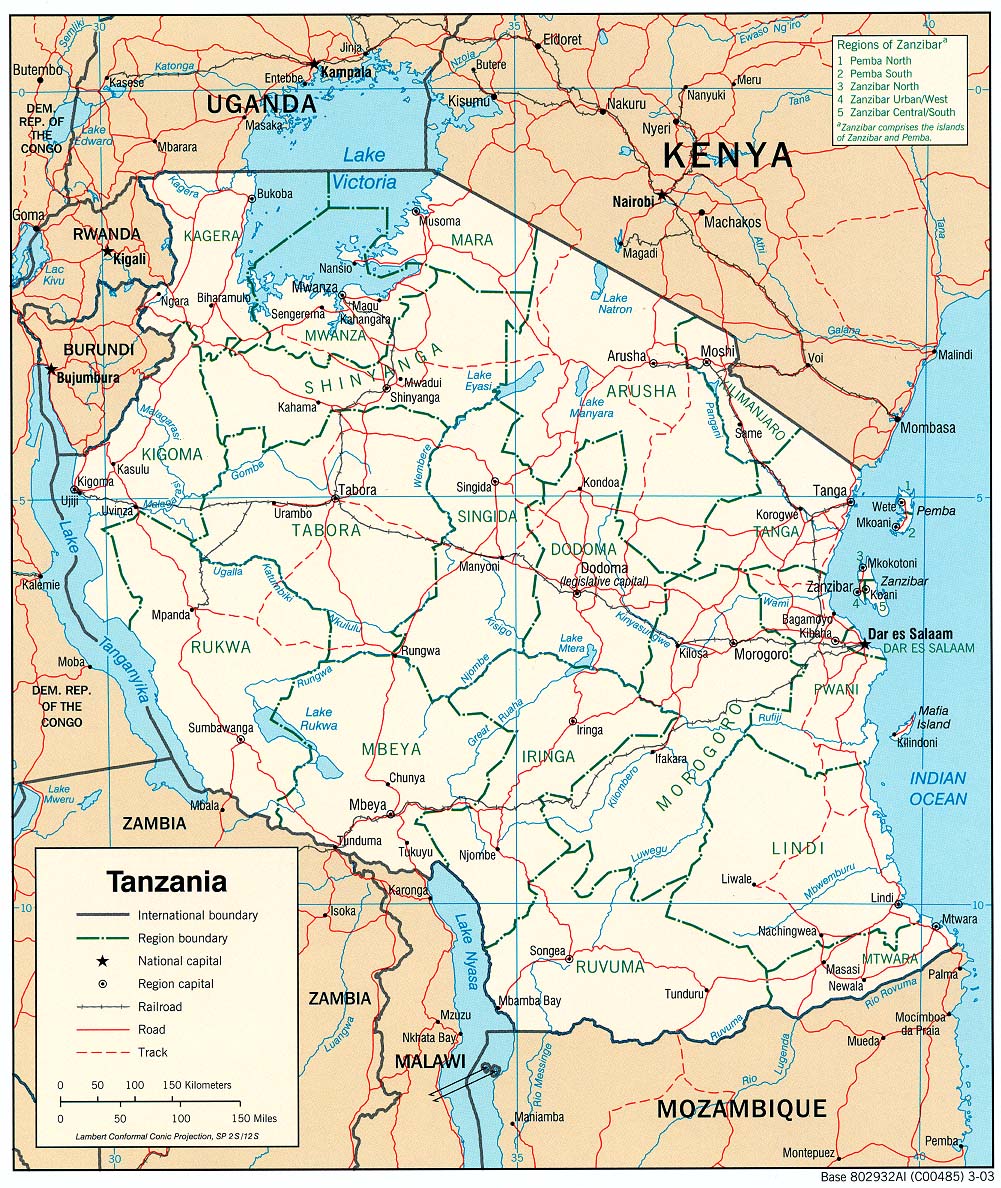
It's strange to think that a few months ago I associated Zanzibar with Tenacious D and Disney World, and now here I am wandering around its busy markets and resting on its beaches. For those who are like I was, the island of Zanzibar is part of Tanzania, and is located a short distance off the shores of the mainland part of the country. I've posted a map of Tanzania--Zanzibar is just off the coast.

Zanzibar is a great place for resting--it is a unique paradise with beautiful beaches with bright blue water (comparable to Cancun), amazing food that showcases the many spices grown on the island, and a very strong Islamic influence that is apparent in the various calls to prayer one can hear echoing throughout the city and the apparel worn by both men and women. The people are very friendly, and Stone Town (the section of the city where I'm staying--a UNESCO World Heritage Site) is a great place to get lost among the many winding alleys. At almost every turn I'm tempted to take a picture of what I see--Zanzibar is incredibly photogenic, from its architecture to its inhabitants, and, finally, its beautiful sunsets over handmade boats that sail along its shores.
The past couple weeks have been filled with amazing experiences, which I'll try to summarize while still doing them justice. Dina and I arrived in Zanzibar early yesterday morning (just as George Bush was wandering around Dar es Salaam, a short distance away). For the week before our arrival, we were wandering around the game parks located in the northern part of Tanzania (very close to Kenya). We were very near to Mount Kilimanjaro and the city of Arusha, which you can see on the map (as a side note: contrary to what Toto sings in their hit song "Africa," Kilimanjaro is not visible from the Serengeti). To be more specific, we spent one day on Lake Manyara, three days in the Serengeti, and a couple days in or around the Ngorongoro Crater. All three places were spectacular.
Dina and I really lucked out. We arrived at the safari company we booked with to find out that no one else had signed up for our trip--it was a private trip with just us, our guide, and a cook. Voyaging around the parks in a beefed-up Land Cruiser was a magical experience. At Lake Manyara, a large family of about thirty baboons wandered along the road with us, a couple babies lagging behind to roll around next to our truck. Elephants and giraffes blocked our route on several occasions.
Ngorongoro Crater, the result of the collapse of an ancient volcano, is breathtaking not only due to the animals that live there, but also due to its sheer size and beauty. Inside the crater I felt as though I was wandering around either dinosaur territory or a fantasy world--a land that seemed untouched by humans. There were large, green hills, a mirror-like lake covered with flamingos, and, constantly in the distance, the enormous walls of the crater. I have a hard time describing Ngorongoro; Dina called it "Eden."
The Serengeti lived up to its reputation. At this time of the year, millions of wildebeests migrate through the Serengeti National Park, and many of the animals give birth there. As you can imagine, this provides a ton of food for the lions, cheetahs, and other predators that inhabit the Serengeti. Watching the drama that plays out is like being in an interactive show on the Discovery Channel, or really several shows--we wandered from "Leopard Country" to "Elephant Country" to "Lion Country," and each region in the Serengeti's over 14,000 square kilometers had a distinct character.
We watched as hundreds of thousands of wildebeests grazed along the vast Serengeti plains, as a pair of cheetahs gnawed at their kill while ducking from buzzards that hovered above their heads, and as hippos fought with each other only a few meters from the shore where we stood. At one point, we found three cheetahs gazing into the distance, looking for food. We followed them for an hour as they stalked a family of gazelles, only to be noticed and left hungry. In defeat and searching for another target, they wandered right by our truck, only ten feet from us. While watching the way the cheetahs stalked, walked, and waited, I understood just how different it is to see them (and all the other animals) in their natural habitat instead of up close and caged in at a zoo.
Each night we found a campsite and put up our tents. There are no barriers between the campsite and the rest of the park--at night we could hear the sound of hyenas wandering around our tents, and one night I literally walked within feet of a grazing water buffalo. Once, at 4am, I awoke to the sound of water buffalo "mooing" in the nearby wilderness. Suddenly, this sound was followed by a roar--in the morning my guide told me he had also been woken up by the sound of lions hunting the buffalo.
And so, carrying tons of memories and hundreds of pictures, I left the parks of Northern Tanzania and arrived here in Zanzibar. I only plan to be here a few more days--just long enough to visit the beaches along the northern coast and to plan the next leg of my trip. Dina will be flying back to New York in a couple days, which means I'll soon be forced to begin my journey as a solo traveler. It's been wonderful traveling with Aditya and Avani in India and Dina here in Africa, and now I'm excited to see what kinds of experiences I'll have on my own. Of course, I am going to be taking a few precautions--tomorrow I'll be visiting a tailor to have pockets sown inside my blue jeans, and on the underside of my belt.
Although my plans are very tentative at this point, here's what I'm thinking (I hope this map helps!):

I plan to fly from here to Dar es Salaam later this week. From Dar es Salaam, I'll take a train west to Zambia, where I'll visit Victoria Falls (which is on the border with Zimbabwe, south of Lusaka). From the Falls, I plan to go back east to Malawi's capital, Lilongwe. Once in Lilongwe, I'll find a bus and head south to Blantyre, where I can take another bus to Mozambique's border. Once across the border, I'll make my way further east, all the way to Mozambique's coast where I'll arrive at Ilha de Mocambique (supposedly a beautiful island). Once in Mozambique, I'm planning to make my way south along the coast, past Swaziland and into South Africa.
Of course, all these plans are tentative, but I'll do my best to keep you all posted on how things play out. Since arriving here in Zanzibar, I've received some advice (and inspiration) from some of the people I've met, including social workers, Peace Corps volunteers, and even a man who backpacked from Cairo to Cape Town. No matter how much I travel, I'm always impressed by the variety of people I run into. I'm going to stay flexible to the advice and information people share with me, which, in addition to my guide, will be the main influences on where I go from day to day.
I hope you're all doing very well, and I'm wishing you the best.
It's strange to think that a few months ago I associated Zanzibar with Tenacious D and Disney World, and now here I am wandering around its busy markets and resting on its beaches. For those who are like I was, the island of Zanzibar is part of Tanzania, and is located a short distance off the shores of the mainland part of the country. I've posted a map of Tanzania--Zanzibar is just off the coast.

Zanzibar is a great place for resting--it is a unique paradise with beautiful beaches with bright blue water (comparable to Cancun), amazing food that showcases the many spices grown on the island, and a very strong Islamic influence that is apparent in the various calls to prayer one can hear echoing throughout the city and the apparel worn by both men and women. The people are very friendly, and Stone Town (the section of the city where I'm staying--a UNESCO World Heritage Site) is a great place to get lost among the many winding alleys. At almost every turn I'm tempted to take a picture of what I see--Zanzibar is incredibly photogenic, from its architecture to its inhabitants, and, finally, its beautiful sunsets over handmade boats that sail along its shores.
The past couple weeks have been filled with amazing experiences, which I'll try to summarize while still doing them justice. Dina and I arrived in Zanzibar early yesterday morning (just as George Bush was wandering around Dar es Salaam, a short distance away). For the week before our arrival, we were wandering around the game parks located in the northern part of Tanzania (very close to Kenya). We were very near to Mount Kilimanjaro and the city of Arusha, which you can see on the map (as a side note: contrary to what Toto sings in their hit song "Africa," Kilimanjaro is not visible from the Serengeti). To be more specific, we spent one day on Lake Manyara, three days in the Serengeti, and a couple days in or around the Ngorongoro Crater. All three places were spectacular.
Dina and I really lucked out. We arrived at the safari company we booked with to find out that no one else had signed up for our trip--it was a private trip with just us, our guide, and a cook. Voyaging around the parks in a beefed-up Land Cruiser was a magical experience. At Lake Manyara, a large family of about thirty baboons wandered along the road with us, a couple babies lagging behind to roll around next to our truck. Elephants and giraffes blocked our route on several occasions.
Ngorongoro Crater, the result of the collapse of an ancient volcano, is breathtaking not only due to the animals that live there, but also due to its sheer size and beauty. Inside the crater I felt as though I was wandering around either dinosaur territory or a fantasy world--a land that seemed untouched by humans. There were large, green hills, a mirror-like lake covered with flamingos, and, constantly in the distance, the enormous walls of the crater. I have a hard time describing Ngorongoro; Dina called it "Eden."
The Serengeti lived up to its reputation. At this time of the year, millions of wildebeests migrate through the Serengeti National Park, and many of the animals give birth there. As you can imagine, this provides a ton of food for the lions, cheetahs, and other predators that inhabit the Serengeti. Watching the drama that plays out is like being in an interactive show on the Discovery Channel, or really several shows--we wandered from "Leopard Country" to "Elephant Country" to "Lion Country," and each region in the Serengeti's over 14,000 square kilometers had a distinct character.
We watched as hundreds of thousands of wildebeests grazed along the vast Serengeti plains, as a pair of cheetahs gnawed at their kill while ducking from buzzards that hovered above their heads, and as hippos fought with each other only a few meters from the shore where we stood. At one point, we found three cheetahs gazing into the distance, looking for food. We followed them for an hour as they stalked a family of gazelles, only to be noticed and left hungry. In defeat and searching for another target, they wandered right by our truck, only ten feet from us. While watching the way the cheetahs stalked, walked, and waited, I understood just how different it is to see them (and all the other animals) in their natural habitat instead of up close and caged in at a zoo.
Each night we found a campsite and put up our tents. There are no barriers between the campsite and the rest of the park--at night we could hear the sound of hyenas wandering around our tents, and one night I literally walked within feet of a grazing water buffalo. Once, at 4am, I awoke to the sound of water buffalo "mooing" in the nearby wilderness. Suddenly, this sound was followed by a roar--in the morning my guide told me he had also been woken up by the sound of lions hunting the buffalo.
And so, carrying tons of memories and hundreds of pictures, I left the parks of Northern Tanzania and arrived here in Zanzibar. I only plan to be here a few more days--just long enough to visit the beaches along the northern coast and to plan the next leg of my trip. Dina will be flying back to New York in a couple days, which means I'll soon be forced to begin my journey as a solo traveler. It's been wonderful traveling with Aditya and Avani in India and Dina here in Africa, and now I'm excited to see what kinds of experiences I'll have on my own. Of course, I am going to be taking a few precautions--tomorrow I'll be visiting a tailor to have pockets sown inside my blue jeans, and on the underside of my belt.
Although my plans are very tentative at this point, here's what I'm thinking (I hope this map helps!):

I plan to fly from here to Dar es Salaam later this week. From Dar es Salaam, I'll take a train west to Zambia, where I'll visit Victoria Falls (which is on the border with Zimbabwe, south of Lusaka). From the Falls, I plan to go back east to Malawi's capital, Lilongwe. Once in Lilongwe, I'll find a bus and head south to Blantyre, where I can take another bus to Mozambique's border. Once across the border, I'll make my way further east, all the way to Mozambique's coast where I'll arrive at Ilha de Mocambique (supposedly a beautiful island). Once in Mozambique, I'm planning to make my way south along the coast, past Swaziland and into South Africa.
Of course, all these plans are tentative, but I'll do my best to keep you all posted on how things play out. Since arriving here in Zanzibar, I've received some advice (and inspiration) from some of the people I've met, including social workers, Peace Corps volunteers, and even a man who backpacked from Cairo to Cape Town. No matter how much I travel, I'm always impressed by the variety of people I run into. I'm going to stay flexible to the advice and information people share with me, which, in addition to my guide, will be the main influences on where I go from day to day.
I hope you're all doing very well, and I'm wishing you the best.
Saturday, February 9, 2008
a quick update
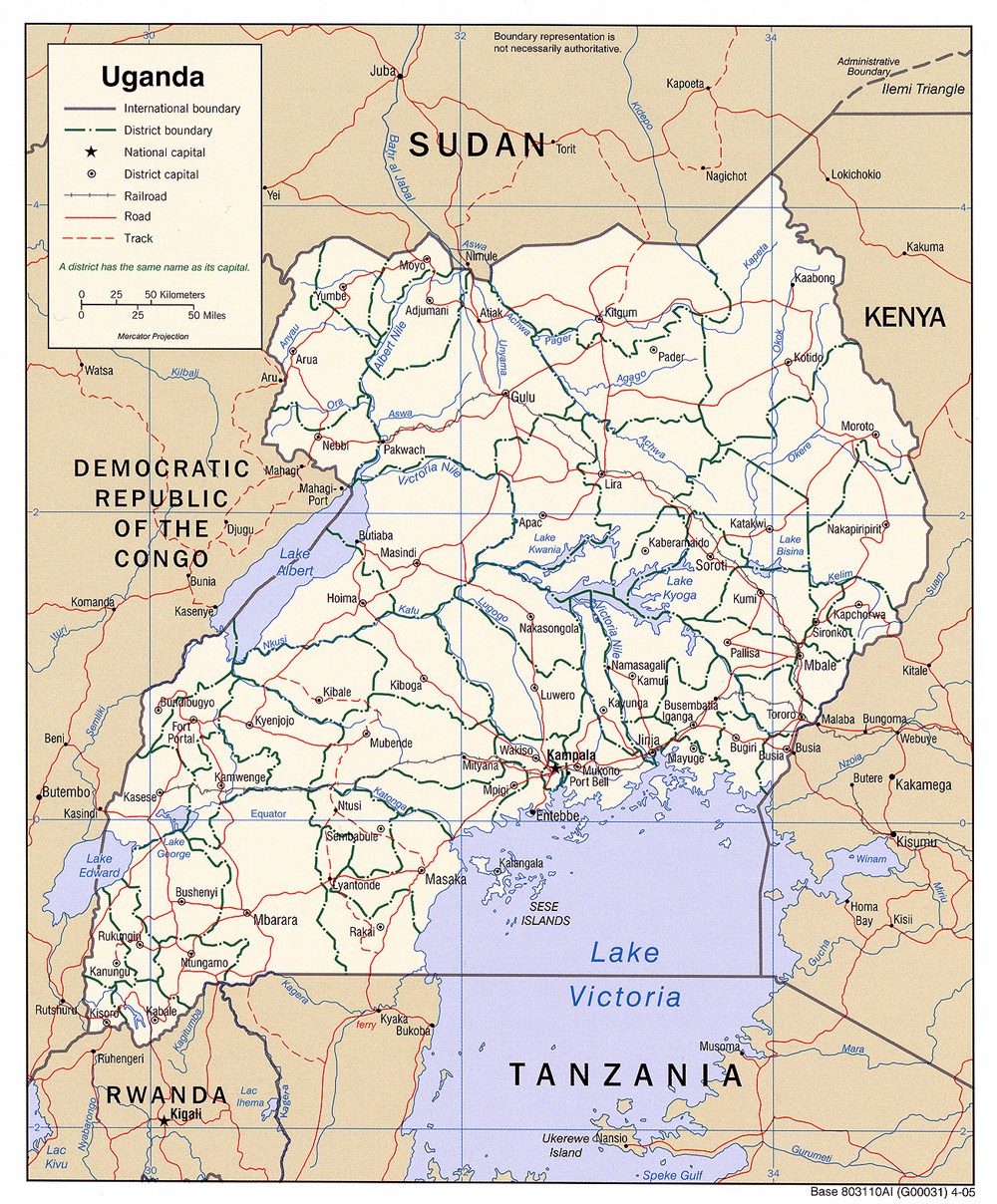
Hello everyone! I have only a few minutes here in Kampala, Uganda to write, but I'll start by saying that things are going very well. Uganda is a beautiful country, with rolling, green hills, tons of flowers and vegetation, and some of the friendliest people I've ever met. Riding in a taxi, all the kids wave and yell "mzungu!" which means "white person!" Fortunately, Uganda is very stable, and the people seem to take a very active interest in the events of their neighbors. This has given me some great opportunities to learn about the turmoil that often affects Africa from a perspective I've never had before.
Last week, Dina (my college friend and travel companion) and I went hiking in the Bwindi impenetrable forest to track down a family of mountain gorillas. The experience was spectacular and unforgettable--we got within 10 feet of the gorillas, including a silverback. They were incredibly docile as they munched their leaves, and seemed to only be mildly curious in us.
Yesterday was another highlight, as we went rafting the Nile. We rafted about four class 5 rapids (the highest allowed for rafting). Contrary to what I was expecting, the experience was really intense. Two times our raft was flipped, and I was held underwater for about 15 seconds (the first time only to come up under another raft!). The second time a kayaker had to rescue me--I was coughing up water for about five minutes. It was pretty awesome!
Tomorrow Dina and I will fly to Kilimanjaro, in Tanzania, in preparation for our trip to the Serengeti and Ngorongoro Crater. Following that, we will head to Zanzibar, where I will plan the next five months of my journey!
I'm wishing you all the best--I'll write again when I get a chance!
Last week, Dina (my college friend and travel companion) and I went hiking in the Bwindi impenetrable forest to track down a family of mountain gorillas. The experience was spectacular and unforgettable--we got within 10 feet of the gorillas, including a silverback. They were incredibly docile as they munched their leaves, and seemed to only be mildly curious in us.
Yesterday was another highlight, as we went rafting the Nile. We rafted about four class 5 rapids (the highest allowed for rafting). Contrary to what I was expecting, the experience was really intense. Two times our raft was flipped, and I was held underwater for about 15 seconds (the first time only to come up under another raft!). The second time a kayaker had to rescue me--I was coughing up water for about five minutes. It was pretty awesome!
Tomorrow Dina and I will fly to Kilimanjaro, in Tanzania, in preparation for our trip to the Serengeti and Ngorongoro Crater. Following that, we will head to Zanzibar, where I will plan the next five months of my journey!
I'm wishing you all the best--I'll write again when I get a chance!
Thursday, January 31, 2008
namaste
I'm writing from the airport in Addis Ababa, Ethiopia, a very bright and sunny place. On the flight here from Delhi, I was upgraded to first class, after being incorrectly told by the airline representative that my reservation had been cancelled since I didn't re-confirm it. So I ended up having a great flight in the almost empty first-class section, complete with an omelette and champagne. The highlight of the flight was waking up to a beautiful sunrise in a perfectly clear sky. Below us were vast sand dunes and not a single sign of civilization. The stewardess told me we were flying over Oman.
After having an enjoyable three weeks in India, I'm left with that frustrating feeling that I only got a small sample of a truly vast and fascinating place. With such a small amount of time, I limited myself to the western region of Rajasthan, which also happens to be the most touristy region in India (40% of tourists who visit India head to Rajasthan). As a result, I was constantly on the beaten path, struggling to see "real" India and being haggled by people used to dealing with tourists. The sites I saw were beautiful, and quite a few of the locals I met were kind and colorful, but I know I left a world untouched. I keep telling myself it's a good thing that I left something for the next time I visit!
I haven't done a very good job of keeping you all updated while I visited the "Three J's" (Jaipur, Jodhpur, and Jaisalmer, the three main destinations in Rajasthan along with Udaipur, which I wasn't able to visit). I first visited Jaipur, a pretty large city a few hours from Delhi that is known for its pink Old City. The highlight of being in Jaipur was spending time with Aditya and Avani, who were doing work there. Together we had wonderful food, did a little bit of exploring the Old City, and went to an interesting carnival complete with local food, traditional dances, and even elephant rides (which I thought were surprisingly comfortable). While not with Adi and Avani, I spent most of my time wandering around the Old City's markets, seeing notable sites including the City Palace and Amber Fort (a huge fort just outside the city), and talking a bit with locals. It was while in Jaipur that people first greeted me ("Namaste!") without the intent of selling me something. This was refreshing. Coincidentally, I also met a French guy about my age who has been traveling in India for the last four months. Having volunteered in a hospital in Calcutta, he gave me some very valuable information on doing volunteer work. By inviting me for a cup of chai tea, he also helped to break in my fear of sampling India's street food.
After a couple days in Jaipur, I took a bus to the blue city, Jodhpur. The bus departed at midnight, and was scheduled to arrive in Jodhpur seven hours later. These turned out to be the worst seven hours of my trip, and some of the worst in all my travels. Prior to the trip, Avani and I decided to have a very large, tasty meal from a street cafe. One hour into my trip, on the dark bus where I was crammed in a small seat near the window, I got sick. Needless to say, the next six hours of the trip were far less than pleasant. I finally arrived in Jodhpur, and spent the first part of the day doing laundry and recovering from the trip. Then I determined to make the most of my one day in the blue city. I'm glad I did.
Jodhpur was a beautiful city--the blue was more of a deep indigo, and made the city glow in the sunlight. Straying from the busy markets I got lost among the tiny pathways lined by blue. Children ran up and greeted me, inviting me to throw a ball with them. A few adults smiled and asked where I was from. I finally found my way to Mehrangarh, an enormous, spectacular fort that overlooks the city. The fort, which looks more like an huge, intricately detailed palace, seems to have been carved directly into the mountainside on which it rests. I spent most of the day there, wandering around the fort's many rooms and balconies. I sat, wrote in my journal, and had a cup of soup (my first food--excluding a chocolate chip cookie Avani gave me before my departure--since I got sick).
While writing in my journal, people would stand next to me and watch me write. I asked them if they could read what I was writing, and they never could--they just wanted to see my handwriting. Once, a whole family--a father, mother, uncle, and three small children--stood over my shoulder watching me write. They asked a few questions about me, then they each thanked me and shook my hand. Meeting people helped to reinvigorate me after my bus trip ordeal. I was again excited about traveling, in spite of its inevitable risks and discomforts. I was also reminded of the element that is most important to me in my travels: the people I meet.
Interestingly, after this reminder new friends regularly started crossing paths with my own. On the seven-hour overnight train ride from Jodhpur to Jaisalmer, I sat with a couple older Australian women whose passion for India was contagious. They shared some traditional Indian sweets with me, told me about the latest in Bollywood gossip, and further convinced me how essential it is that I see more of India.
I slept very well and woke up in the desert city of Jaisalmer. Made of sandstone, this is known as the golden city. It is also much smaller than my previous destinations in India, having less than 100,000 inhabitants. The focus of the city is its fort, which is still inhabited and full of life, containing eclectic shops selling leather journals, books, colorful clothing, and spices.
I decided to spend my time in Jaisalmer escaping it all, so I hired a guide to take me into the nearby Thar Desert on a camel for three days and two nights. The Thar Desert, which borders Pakistan only 30km from where I was, is not the dune-filled desert you may imagine. It does, however, provide some beautiful sunrises and sunsets, and amazing views of the stars--views that vividly reminded me of Mongolia for maybe the first time since leaving there in 2004.
The highlight of the trip, though, was spending time with the other travelers who were also along for the ride--three adventurous 19 year-old Australian students. Spending time with these three was great. Their kindness, joy, and sense of adventure was contagious. Even though they were only 19, they gave me advice on traveling China, Laos, Cambodia, Thailand, and Vietnam, and they wanted my advice for a year-long trip they plan to spend in Latin America. Although I wish we could have traveled together longer, we had to part.
And so here I am in Ethiopia! Having only been in the airport, I can't say much other than that it is definitely a cool feeling to set foot in Africa for the first time!
After having an enjoyable three weeks in India, I'm left with that frustrating feeling that I only got a small sample of a truly vast and fascinating place. With such a small amount of time, I limited myself to the western region of Rajasthan, which also happens to be the most touristy region in India (40% of tourists who visit India head to Rajasthan). As a result, I was constantly on the beaten path, struggling to see "real" India and being haggled by people used to dealing with tourists. The sites I saw were beautiful, and quite a few of the locals I met were kind and colorful, but I know I left a world untouched. I keep telling myself it's a good thing that I left something for the next time I visit!
I haven't done a very good job of keeping you all updated while I visited the "Three J's" (Jaipur, Jodhpur, and Jaisalmer, the three main destinations in Rajasthan along with Udaipur, which I wasn't able to visit). I first visited Jaipur, a pretty large city a few hours from Delhi that is known for its pink Old City. The highlight of being in Jaipur was spending time with Aditya and Avani, who were doing work there. Together we had wonderful food, did a little bit of exploring the Old City, and went to an interesting carnival complete with local food, traditional dances, and even elephant rides (which I thought were surprisingly comfortable). While not with Adi and Avani, I spent most of my time wandering around the Old City's markets, seeing notable sites including the City Palace and Amber Fort (a huge fort just outside the city), and talking a bit with locals. It was while in Jaipur that people first greeted me ("Namaste!") without the intent of selling me something. This was refreshing. Coincidentally, I also met a French guy about my age who has been traveling in India for the last four months. Having volunteered in a hospital in Calcutta, he gave me some very valuable information on doing volunteer work. By inviting me for a cup of chai tea, he also helped to break in my fear of sampling India's street food.
After a couple days in Jaipur, I took a bus to the blue city, Jodhpur. The bus departed at midnight, and was scheduled to arrive in Jodhpur seven hours later. These turned out to be the worst seven hours of my trip, and some of the worst in all my travels. Prior to the trip, Avani and I decided to have a very large, tasty meal from a street cafe. One hour into my trip, on the dark bus where I was crammed in a small seat near the window, I got sick. Needless to say, the next six hours of the trip were far less than pleasant. I finally arrived in Jodhpur, and spent the first part of the day doing laundry and recovering from the trip. Then I determined to make the most of my one day in the blue city. I'm glad I did.
Jodhpur was a beautiful city--the blue was more of a deep indigo, and made the city glow in the sunlight. Straying from the busy markets I got lost among the tiny pathways lined by blue. Children ran up and greeted me, inviting me to throw a ball with them. A few adults smiled and asked where I was from. I finally found my way to Mehrangarh, an enormous, spectacular fort that overlooks the city. The fort, which looks more like an huge, intricately detailed palace, seems to have been carved directly into the mountainside on which it rests. I spent most of the day there, wandering around the fort's many rooms and balconies. I sat, wrote in my journal, and had a cup of soup (my first food--excluding a chocolate chip cookie Avani gave me before my departure--since I got sick).
While writing in my journal, people would stand next to me and watch me write. I asked them if they could read what I was writing, and they never could--they just wanted to see my handwriting. Once, a whole family--a father, mother, uncle, and three small children--stood over my shoulder watching me write. They asked a few questions about me, then they each thanked me and shook my hand. Meeting people helped to reinvigorate me after my bus trip ordeal. I was again excited about traveling, in spite of its inevitable risks and discomforts. I was also reminded of the element that is most important to me in my travels: the people I meet.
Interestingly, after this reminder new friends regularly started crossing paths with my own. On the seven-hour overnight train ride from Jodhpur to Jaisalmer, I sat with a couple older Australian women whose passion for India was contagious. They shared some traditional Indian sweets with me, told me about the latest in Bollywood gossip, and further convinced me how essential it is that I see more of India.
I slept very well and woke up in the desert city of Jaisalmer. Made of sandstone, this is known as the golden city. It is also much smaller than my previous destinations in India, having less than 100,000 inhabitants. The focus of the city is its fort, which is still inhabited and full of life, containing eclectic shops selling leather journals, books, colorful clothing, and spices.
I decided to spend my time in Jaisalmer escaping it all, so I hired a guide to take me into the nearby Thar Desert on a camel for three days and two nights. The Thar Desert, which borders Pakistan only 30km from where I was, is not the dune-filled desert you may imagine. It does, however, provide some beautiful sunrises and sunsets, and amazing views of the stars--views that vividly reminded me of Mongolia for maybe the first time since leaving there in 2004.
The highlight of the trip, though, was spending time with the other travelers who were also along for the ride--three adventurous 19 year-old Australian students. Spending time with these three was great. Their kindness, joy, and sense of adventure was contagious. Even though they were only 19, they gave me advice on traveling China, Laos, Cambodia, Thailand, and Vietnam, and they wanted my advice for a year-long trip they plan to spend in Latin America. Although I wish we could have traveled together longer, we had to part.
And so here I am in Ethiopia! Having only been in the airport, I can't say much other than that it is definitely a cool feeling to set foot in Africa for the first time!
Monday, January 21, 2008
Leaving for Rajasthan
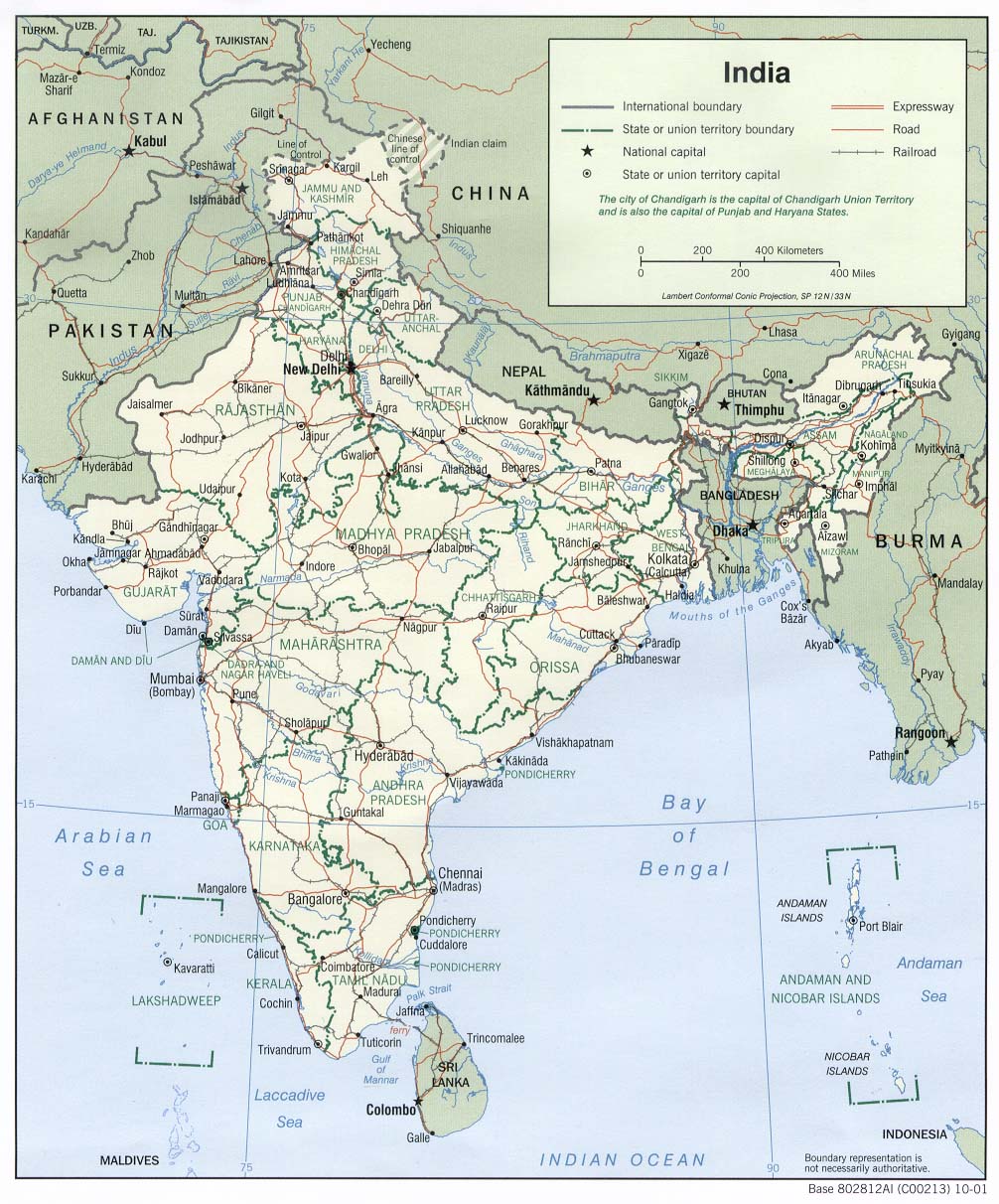
Thanks to Avani's help, I am right now holding three train tickets that will allow me to explore Rajasthan, India's western region of deserts and palaces, and also the region that borders Pakistan. The region is famous for its "Three J's: Jaipur, Jodhpur, and Jaisalmer," three cities each with its own unique look and flavor. Jaipur is the pink city, Jodhpur the blue city, and Jaisalmer the gold city, which seems to arise out of the desert like a mirage. I will be gone about exactly one week visiting each of the three cities; here's the itinerary (you can find good maps here: http://www.lib.utexas.edu/maps/india.html):
January 22:
Leave Delhi at 6:10am
Arrive at Jaipur at about 11am
See Jaipur
January 23:
Jaipur
January 24:
Jaipur
Leave Jaipur late night (around midnight)
January 25:
Arrive at Jodhpur early morning (about 6am)
See Jodhpur
Leave Jodhpur at 11:25pm
January 26:
Arrive at Jaisalmer early morning (about 8am)
Go on camel safari in desert
Spend night on dunes
January 27:
Return from camel safari
See Jaisalmer
January 28:
Leave Jaisalmer at 4pm
January 29:
Arrive in Delhi at 10am
Leave for Kampala, Uganda, late that night
I'll send more details of my travels in Rajasthan as soon as I have an internet connection and some free time. For now, I'll leave you with a few of the pictures I've snapped so far...
Images from Jama Masjid, one of the largest mosques in India:


Delhi:

The view in a rickshaw:

My backpack is delivered!

Hamayun's Tomb (like walking into a fairytale):

Me and Avani:

Sunrise on the way to the Taj Mahal:

Aditya rapping to "Intergalactic" on the way to the Taj Mahal:

The trio at the Taj:


Monkeys at the Taj (there are monkeys running all around Delhi, too)!:

Good night!
January 22:
Leave Delhi at 6:10am
Arrive at Jaipur at about 11am
See Jaipur
January 23:
Jaipur
January 24:
Jaipur
Leave Jaipur late night (around midnight)
January 25:
Arrive at Jodhpur early morning (about 6am)
See Jodhpur
Leave Jodhpur at 11:25pm
January 26:
Arrive at Jaisalmer early morning (about 8am)
Go on camel safari in desert
Spend night on dunes
January 27:
Return from camel safari
See Jaisalmer
January 28:
Leave Jaisalmer at 4pm
January 29:
Arrive in Delhi at 10am
Leave for Kampala, Uganda, late that night
I'll send more details of my travels in Rajasthan as soon as I have an internet connection and some free time. For now, I'll leave you with a few of the pictures I've snapped so far...
Images from Jama Masjid, one of the largest mosques in India:


Delhi:

The view in a rickshaw:

My backpack is delivered!

Hamayun's Tomb (like walking into a fairytale):

Me and Avani:

Sunrise on the way to the Taj Mahal:

Aditya rapping to "Intergalactic" on the way to the Taj Mahal:

The trio at the Taj:


Monkeys at the Taj (there are monkeys running all around Delhi, too)!:

Good night!
Wednesday, January 16, 2008
playing the game
If you've ever wanted to be shown all the ways you can possibly be ripped off, come to India. One could pack a decent-sized book with all the scams one may encounter here: taxi drivers tell you your hotel has burned down just so they can take you to another hotel that pays them a commission; individuals approach you at free museums claiming you forgot to buy an admission ticket, which they happily collect for; when you finally find a rickshaw with a working meter (most of them work; the drivers just claim they don't), the drivers take you three times the distance to your actual destination, claiming they misunderstood where you wanted to go. My guide even tells of a scam that occurred before the police cracked down on it: restaurants would poison the food of tourists so that they would be sent to a local hospital. The hospital would then reimburse the restaurant a part of the insurance money.
Arriving, finding your hotel, navigating the public transportation system, and finally stepping into that park or museum you've been looking forward to is a trying process in any foreign country. When there are numerous individuals at every step of the process trying to make money off of you by feeding you false information, it's easy to become daunted. I reached a low point yesterday.
I had decided to walk between two relatively close sites in Delhi. Unfortunately, a bridge for only vehicles blocked my path, and forced me to hire a middle-aged man to take me the ten-minute ride in his rickshaw. "How many rupees?" I asked him. He promised me, in fluent English, that he would use the meter. Once in the rickshaw, comforted by being able to watch the progress of my fare on the meter, the man began telling me about himself. He explained that he has lived in Delhi his whole life. He shared his favorite parts of India, which he travels every year, and why those places mean so much to him. He told me his son collects coins, and I offered him a quarter from the US. His son would be visiting tomorrow, and would be very happy to find the coin waiting for him. He was even planning a big celebration for his son. "You can ask me anything about Delhi," he told me, "I will give you an honest answer."
I opened up to him too, seeing no reason not to since I had my current fare right in front of my face--no reason to worry about the possibility of this open, nice guy ripping me off, right? Wrong. I should have known things weren't as they seemed when he acted like he misunderstood my destination and headed in the wrong direction. I caught him in the act, but decided, instead of turning around, to go to another site I wanted to see in the direction he took.
We finally arrived, and I thanked him for the ride and conversation as I withdrew money to pay the 67 rupee fare. "Sixty-seven rupees," I said. He responded: "Oh no, sir. The meter is only a gauge for distance. You need to multiply that number by five." Multiplying 67 rupees by five means I owed this guy eight dollars--at least two times more than any conceivable rickshaw ride around the city could cost, not considering the fact that he even went the wrong way. I told him that price was entirely unfair, and that I thought 100 rupees would be more than fair. He looked at me in the eyes and said, "Sir, that is simply not enough. This meter does not show your fare; it needs to be multiplied by five." I told him I would only give him 100 rupees and he said the words I have already heard and been confused by several times: "Sir, I have never wanted money. I will accept what you will give me, but I ask that you be fair." I swallowed my pride (and my common sense), thought about the good conversations we had about him and his family, and handed him 200 rupees. "If I give you any more, I'm going to have to walk home," I told him. He accepted.
Walking away from the man, I was furious. I was frustrated that I had been ripped off once again. But, even more, I was upset that someone had gained and betrayed my trust so overtly. I wanted to be able to trust people, to listen to and believe what they told me about themselves. I took it personally.
While fuming, I stepped into a nice statue shop, where I was greeted by a reserved young man. I looked for a few minutes, then began to walk out when the man said, "Please know that we will give you 40% off of anything in the store. That is just how it is done here in India." For some reason the man's words resonated with me. It is an assumption in India that things are listed as being more expensive than they are; it is an assumption that they will be bargained down. These assumptions are part of India's culture and society, and here I was taking them as personal attacks and betrayals of my trust. I decided I could either be frustrated with this aspect of India, or I could learn about it and play along. Considering how useful the ability to bargain would be while traveling through my next destinations (Africa and China), not to mention in life in general, I decided I would learn to play along.
Realizing there was no shame in getting the lowest price possible, and that I had little to lose if I tried to offer a price too low, I went to work. I wandered into a packed, chaotic underground market and decided to go shopping for the first item on my shopping list: tape. I only needed a piece, and I eventually found one at an electronics shop. The guy wanted 100 rupees--yes, $2.50 for a piece of tape. After a minute of bargaining, I walked out of the store with a free piece of tape (the guy told me he was only kidding with me--that he didn't actually want me to pay for it. That's after he asked me for 100, 80, and, finally, 50 rupees).
It was only a piece of tape, but it was like a big shiny trophy to me.
When it was finally time to go home, I walked to the rickshaws, knowing that I would pay no more than 100 rupees for the ride back home. "How much to take me to Vasant Vihar?" I asked. "150 rupees." "I'll give you 60." "No way," the first driver told me. "Okay, thank you," I said, and walked away. After this conversation repeated itself with three drivers, I decided I was probably shooting too low. In the end, I got home for a fair price to both me and my driver. From what I've heard from the locals, a foreigner getting a fair price on a rickshaw is a pretty big deal.
Earlier tonight I went out with the interns working with the Clinton Foundation here in Delhi. One of them shared her perspective on being ripped off in India. She considered that India is packed with people, each of whom is on his or her own. Many of these people are extremely poor, and on a daily basis watch people who bought a trip to India for a small fortune that could change their lives forever. Is it really any wonder that they try to earn an extra few rupees off of these foreigners?
I suppose, in the end, that I'm grateful that Indians give foreigners a chance to use bargaining to defend what they have. In many of the other countries I've visited (Chile, Colombia, and Brazil stand out), violence is viewed as a much more effective tool for getting one's hands on a foreigner's wallet.
Arriving, finding your hotel, navigating the public transportation system, and finally stepping into that park or museum you've been looking forward to is a trying process in any foreign country. When there are numerous individuals at every step of the process trying to make money off of you by feeding you false information, it's easy to become daunted. I reached a low point yesterday.
I had decided to walk between two relatively close sites in Delhi. Unfortunately, a bridge for only vehicles blocked my path, and forced me to hire a middle-aged man to take me the ten-minute ride in his rickshaw. "How many rupees?" I asked him. He promised me, in fluent English, that he would use the meter. Once in the rickshaw, comforted by being able to watch the progress of my fare on the meter, the man began telling me about himself. He explained that he has lived in Delhi his whole life. He shared his favorite parts of India, which he travels every year, and why those places mean so much to him. He told me his son collects coins, and I offered him a quarter from the US. His son would be visiting tomorrow, and would be very happy to find the coin waiting for him. He was even planning a big celebration for his son. "You can ask me anything about Delhi," he told me, "I will give you an honest answer."
I opened up to him too, seeing no reason not to since I had my current fare right in front of my face--no reason to worry about the possibility of this open, nice guy ripping me off, right? Wrong. I should have known things weren't as they seemed when he acted like he misunderstood my destination and headed in the wrong direction. I caught him in the act, but decided, instead of turning around, to go to another site I wanted to see in the direction he took.
We finally arrived, and I thanked him for the ride and conversation as I withdrew money to pay the 67 rupee fare. "Sixty-seven rupees," I said. He responded: "Oh no, sir. The meter is only a gauge for distance. You need to multiply that number by five." Multiplying 67 rupees by five means I owed this guy eight dollars--at least two times more than any conceivable rickshaw ride around the city could cost, not considering the fact that he even went the wrong way. I told him that price was entirely unfair, and that I thought 100 rupees would be more than fair. He looked at me in the eyes and said, "Sir, that is simply not enough. This meter does not show your fare; it needs to be multiplied by five." I told him I would only give him 100 rupees and he said the words I have already heard and been confused by several times: "Sir, I have never wanted money. I will accept what you will give me, but I ask that you be fair." I swallowed my pride (and my common sense), thought about the good conversations we had about him and his family, and handed him 200 rupees. "If I give you any more, I'm going to have to walk home," I told him. He accepted.
Walking away from the man, I was furious. I was frustrated that I had been ripped off once again. But, even more, I was upset that someone had gained and betrayed my trust so overtly. I wanted to be able to trust people, to listen to and believe what they told me about themselves. I took it personally.
While fuming, I stepped into a nice statue shop, where I was greeted by a reserved young man. I looked for a few minutes, then began to walk out when the man said, "Please know that we will give you 40% off of anything in the store. That is just how it is done here in India." For some reason the man's words resonated with me. It is an assumption in India that things are listed as being more expensive than they are; it is an assumption that they will be bargained down. These assumptions are part of India's culture and society, and here I was taking them as personal attacks and betrayals of my trust. I decided I could either be frustrated with this aspect of India, or I could learn about it and play along. Considering how useful the ability to bargain would be while traveling through my next destinations (Africa and China), not to mention in life in general, I decided I would learn to play along.
Realizing there was no shame in getting the lowest price possible, and that I had little to lose if I tried to offer a price too low, I went to work. I wandered into a packed, chaotic underground market and decided to go shopping for the first item on my shopping list: tape. I only needed a piece, and I eventually found one at an electronics shop. The guy wanted 100 rupees--yes, $2.50 for a piece of tape. After a minute of bargaining, I walked out of the store with a free piece of tape (the guy told me he was only kidding with me--that he didn't actually want me to pay for it. That's after he asked me for 100, 80, and, finally, 50 rupees).
It was only a piece of tape, but it was like a big shiny trophy to me.
When it was finally time to go home, I walked to the rickshaws, knowing that I would pay no more than 100 rupees for the ride back home. "How much to take me to Vasant Vihar?" I asked. "150 rupees." "I'll give you 60." "No way," the first driver told me. "Okay, thank you," I said, and walked away. After this conversation repeated itself with three drivers, I decided I was probably shooting too low. In the end, I got home for a fair price to both me and my driver. From what I've heard from the locals, a foreigner getting a fair price on a rickshaw is a pretty big deal.
Earlier tonight I went out with the interns working with the Clinton Foundation here in Delhi. One of them shared her perspective on being ripped off in India. She considered that India is packed with people, each of whom is on his or her own. Many of these people are extremely poor, and on a daily basis watch people who bought a trip to India for a small fortune that could change their lives forever. Is it really any wonder that they try to earn an extra few rupees off of these foreigners?
I suppose, in the end, that I'm grateful that Indians give foreigners a chance to use bargaining to defend what they have. In many of the other countries I've visited (Chile, Colombia, and Brazil stand out), violence is viewed as a much more effective tool for getting one's hands on a foreigner's wallet.
Monday, January 14, 2008
By the seat of my pants
As some of you have already heard, I've once again decided to let my wanderlust get the best of me. Motivated by the desire to see new parts of the world, the need to do some serious introspection, a confirmed spot in law school, some gracious invitations from friends, and eight months of free time on my hands, I decided to leave home and dedicate the next few months to living out of my backpack. Here's the tentative plan:
January 11th - 20th: Delhi and Agra, India (Taj Mahal)
January 21st - 28th: Rajasthan, India (Jaipur, Jodhpur, Jaisalmer, maybe Udaipur)
January 29th: Fly to Kampala, Uganda
January 30th - February 6th: Gorilla trekking in Uganda
February 6th - 9th: Explore Kampala, Uganda
February 10th - 15th: Safari in Tanzania (Serengeti, Ngorongoro Crater, etc.)
February 16th - March 31st - Zanzibar, Ethiopia, Zambia (Victoria Falls), Botswana, South Africa
April 1st - 30th: China (with possible trips to Taiwan and Hong Kong)
May 1st - July 1st: Southeast Asia (Thailand, Cambodia, Vietnam, Laos)
I apologize for the details becoming vague in the later months--unlike most of my other trips, I'm planning this one on a day-by-day basis, by the seat of my pants, relying on recommendations of people I meet along the way and nice travel deals I might stumble upon.
======================
Last Friday I boarded a plane in Orlando, Florida and flew to what is probably the polar opposite of "tranquilo" Montevideo, Uruguay--Delhi, India. Minutes after finding out my airline lost my backpack (aka my lifeblood for the trip) and boarding a bulky, 50s style taxi with red and blue flashing lights that darted through traffic while constantly honking, I had a strong urge to yell "YEEEHAAAAW!!" That wouldn't be the only time I'd have that urge here in Delhi--this fascinating place is not for the tame. Never before have I seen such a level of poverty, chaos, and potential risks to my health, from the existence of TB that requires me to gargle with hot water, to traffic chaos that puts vehicles on sidewalks, flying through red lights, and going the wrong way, to absolutely prohibited food and water "that will give me cholera" (words of my truly generous host, Adi).
But amidst all the chaos and confusion, I'm having a great time. It's actually not hard to in a place where monkeys hang out on the sidewalks. But, more importantly, in Delhi nothing is cushioned--you are faced with raw reality, in all its pain and beauty.
Today was my first day actually experiencing Delhi, and already I have some unforgettable memories. Toward the top of the "unforgettable memories" list is my first ride in a rickshaw! Also, I visited a beautiful, enormous mosque, where I had a chance to chat with some of its more regular visitors about topics including Islam and Uruguay.
Today much of India celebrates the start of the harvest, a holiday (oftentimes compared to our Thanksgiving) that sees many people giving food to those less fortunate than themselves. In the spirit of the holiday, Avani (a friend who lives here), her mom, and her sister kindly invited me to join them this morning as they distributed bags of rice and lentils to poor individuals throughout the city. We arrived at a location with many homeless individuals and asked them to form a line so we could distribute the food. As soon as a line formed, one individual ignored it and grabbed a bag of rice. In an instant chaos broke loose--everyone lunged for the food, forming a large pile of people clawing at each other. Because I was holding a grocery bag containing many bags of food, many people swarmed toward me, fighting with anyone in their way--some went so far as to try to bite my legs. I immediately got back into our car, and listened as pieces of rice hit it--the bags of food were being torn apart as people fought over them. One handicapped woman used her crutch to beat others over the head in an attempt to get some food.
That plan having been abandoned, we decided to instead drive through the city and give bags to poor families and individuals along the way. This plan, which allowed us to share food with several mothers and quite a few children who probably would not have fought through the earlier crowd, was a success. I don't know if it's possible to imagine a more potent, illustrative example of why the method of distributing help to the poor is just as important as what is distributed.
It's getting late here, so I should sign off. I'm not sure how often I'll be able to update this blog, since I'm not sure exactly where I'll be. But I will try to update it as often as possible, and if I can figure out a way to post some of my pictures, I will!
By the way, earlier tonight the airline (KLM) delivered my backpack to my room, and disaster was narrowly averted.
Good night!
Dustin
January 11th - 20th: Delhi and Agra, India (Taj Mahal)
January 21st - 28th: Rajasthan, India (Jaipur, Jodhpur, Jaisalmer, maybe Udaipur)
January 29th: Fly to Kampala, Uganda
January 30th - February 6th: Gorilla trekking in Uganda
February 6th - 9th: Explore Kampala, Uganda
February 10th - 15th: Safari in Tanzania (Serengeti, Ngorongoro Crater, etc.)
February 16th - March 31st - Zanzibar, Ethiopia, Zambia (Victoria Falls), Botswana, South Africa
April 1st - 30th: China (with possible trips to Taiwan and Hong Kong)
May 1st - July 1st: Southeast Asia (Thailand, Cambodia, Vietnam, Laos)
I apologize for the details becoming vague in the later months--unlike most of my other trips, I'm planning this one on a day-by-day basis, by the seat of my pants, relying on recommendations of people I meet along the way and nice travel deals I might stumble upon.
======================
Last Friday I boarded a plane in Orlando, Florida and flew to what is probably the polar opposite of "tranquilo" Montevideo, Uruguay--Delhi, India. Minutes after finding out my airline lost my backpack (aka my lifeblood for the trip) and boarding a bulky, 50s style taxi with red and blue flashing lights that darted through traffic while constantly honking, I had a strong urge to yell "YEEEHAAAAW!!" That wouldn't be the only time I'd have that urge here in Delhi--this fascinating place is not for the tame. Never before have I seen such a level of poverty, chaos, and potential risks to my health, from the existence of TB that requires me to gargle with hot water, to traffic chaos that puts vehicles on sidewalks, flying through red lights, and going the wrong way, to absolutely prohibited food and water "that will give me cholera" (words of my truly generous host, Adi).
But amidst all the chaos and confusion, I'm having a great time. It's actually not hard to in a place where monkeys hang out on the sidewalks. But, more importantly, in Delhi nothing is cushioned--you are faced with raw reality, in all its pain and beauty.
Today was my first day actually experiencing Delhi, and already I have some unforgettable memories. Toward the top of the "unforgettable memories" list is my first ride in a rickshaw! Also, I visited a beautiful, enormous mosque, where I had a chance to chat with some of its more regular visitors about topics including Islam and Uruguay.
Today much of India celebrates the start of the harvest, a holiday (oftentimes compared to our Thanksgiving) that sees many people giving food to those less fortunate than themselves. In the spirit of the holiday, Avani (a friend who lives here), her mom, and her sister kindly invited me to join them this morning as they distributed bags of rice and lentils to poor individuals throughout the city. We arrived at a location with many homeless individuals and asked them to form a line so we could distribute the food. As soon as a line formed, one individual ignored it and grabbed a bag of rice. In an instant chaos broke loose--everyone lunged for the food, forming a large pile of people clawing at each other. Because I was holding a grocery bag containing many bags of food, many people swarmed toward me, fighting with anyone in their way--some went so far as to try to bite my legs. I immediately got back into our car, and listened as pieces of rice hit it--the bags of food were being torn apart as people fought over them. One handicapped woman used her crutch to beat others over the head in an attempt to get some food.
That plan having been abandoned, we decided to instead drive through the city and give bags to poor families and individuals along the way. This plan, which allowed us to share food with several mothers and quite a few children who probably would not have fought through the earlier crowd, was a success. I don't know if it's possible to imagine a more potent, illustrative example of why the method of distributing help to the poor is just as important as what is distributed.
It's getting late here, so I should sign off. I'm not sure how often I'll be able to update this blog, since I'm not sure exactly where I'll be. But I will try to update it as often as possible, and if I can figure out a way to post some of my pictures, I will!
By the way, earlier tonight the airline (KLM) delivered my backpack to my room, and disaster was narrowly averted.
Good night!
Dustin
Subscribe to:
Posts (Atom)